

Resume Boosting Courses: 12 Essential Picks for Career Growth
Discover the best resume boosting courses for 2026 that help you advance your career and align with ATS requirements for in-demand skills.
 Emily Johnson
Introduction
Key Takeaways
- Strategic online courses can transform your resume by filling skill gaps and aligning with employer demands in 2026
- Understanding Applicant Tracking Systems (ATS) is crucial when selecting courses to ensure your resume passes initial screening filters
- The right resume boosting courses combine in-demand technical skills with professional development to maximize career advancement opportunities
- Platforms offering recognized certifications provide the most value for both resume enhancement and actual skill development
- Proper course selection and resume presentation can significantly increase your chances of landing interviews
As someone who has spent over a decade in recruitment and career coaching, I've witnessed countless career transformations powered by strategic online learning. A few years back, I worked with a client struggling to transition into a tech-driven role. He had extensive experience but lacked the specific digital skills employers were actively seeking. Together, we identified targeted courses that would not only build his capabilities but also make his resume more compelling to both hiring managers and the automated systems screening applications.
The landscape of job searching has evolved dramatically, and in 2026, resume boosting courses are more crucial than ever for staying competitive. The challenge isn't just acquiring new skills—it's choosing courses that genuinely enhance your marketability and align with how modern recruitment systems work. Understanding applicant tracking systems (ATS) is essential for tailoring your resume effectively, as many companies use these systems to filter applications before human eyes ever see them.
The explosion of online learning platforms has created both opportunity and overwhelm. From data analytics to leadership development, the options seem endless. The key is strategic selection: choosing courses that fill your expertise gaps, match your career aspirations, and incorporate the keywords and credentials that ATS systems recognize. A well-crafted resume that showcases relevant coursework can significantly increase your chances of landing an interview, making course selection an investment in your professional future.
In this guide, we'll explore the essential resume boosting courses for 2026, how to choose programs that pass ATS filters, and the most effective ways to leverage your new credentials. Whether you're pivoting careers, climbing the ladder, or simply staying current in your field, the right courses can provide the competitive edge you need.
Sources
Why Online Courses Matter for Your Resume in 2026
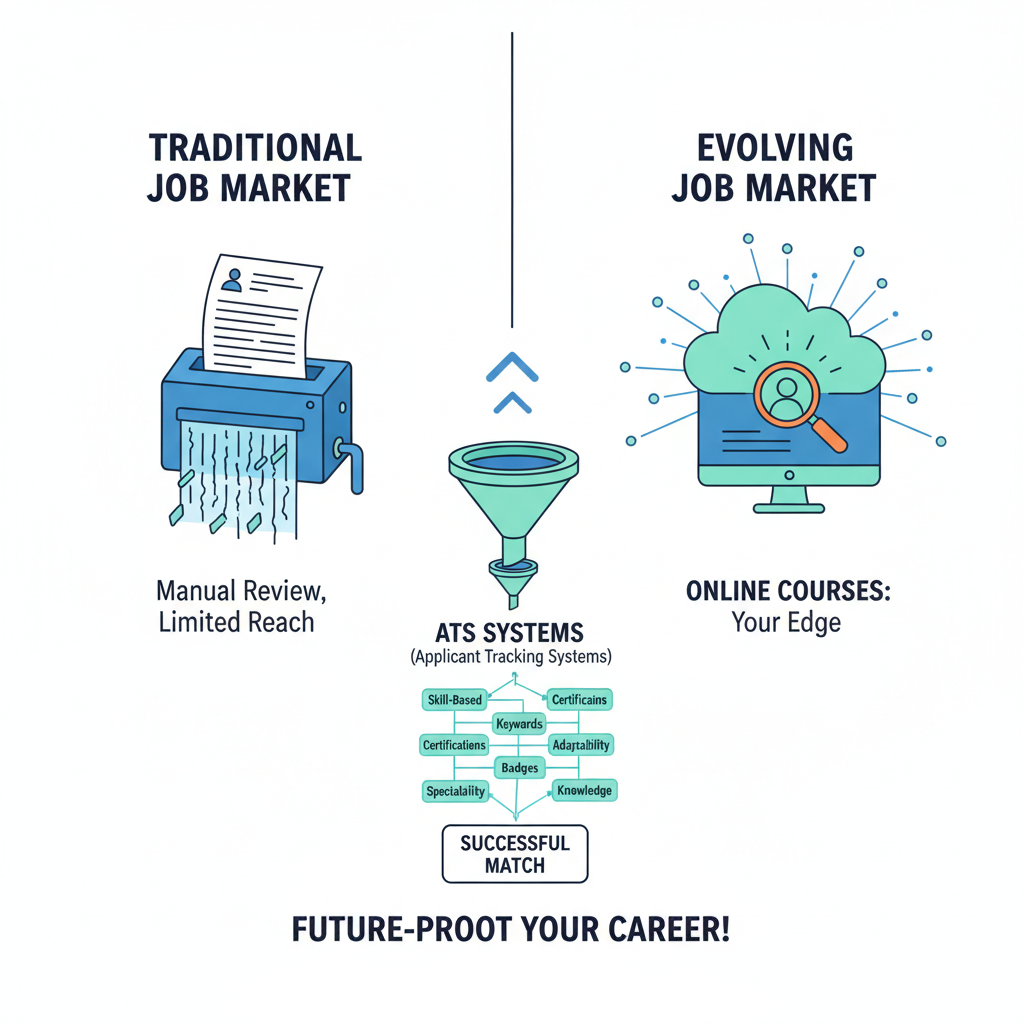
The job market in 2026 has fundamentally shifted from credential-based hiring to skills-based evaluation. Employers are no longer satisfied with static qualifications from years past. Instead, they're actively seeking candidates who demonstrate continuous learning and adaptability through recent, relevant training. This evolution means that strategic course completion has become one of the most powerful tools for standing out in competitive applicant pools.
How ATS Systems Prioritize Skill-Based Keywords
Applicant Tracking Systems have become increasingly sophisticated in how they scan and rank resumes. These systems don't just look for job titles or degrees anymore—they prioritize specific skill keywords that match the requirements listed in job descriptions. When you complete targeted courses and list them properly on your resume, you're essentially speaking the language that ATS software is programmed to recognize and reward.
Certifications provide a structured way to acquire new skills and remain relevant in a rapidly evolving professional landscape. Each course you complete adds valuable keywords to your resume, whether it's "Python programming," "agile project management," or "digital marketing analytics." These aren't just buzzwords—they're the exact terms that ATS filters are scanning for when determining which candidates move forward in the hiring process.
Signaling Continuous Learning to Employers
Beyond passing ATS filters, resume boosting courses send a clear message to human recruiters and hiring managers: you're committed to professional growth. In my years of reviewing resumes, I've consistently observed that candidates who invest in ongoing education demonstrate the kind of adaptability that employers value most. This is particularly important in rapidly changing fields where yesterday's skills can quickly become outdated.
The global professional landscape is transforming at an unprecedented pace. Projections show the global AI market will reach a whopping USD 826.70 billion by the end of 2030, illustrating just one area where new skills are becoming essential. Whether you're looking to pivot into emerging fields or deepen expertise in your current role, strategic course selection positions you as someone who proactively addresses skill gaps rather than waiting for them to become career obstacles.
The Competitive Advantage of Strategic Course Completion
Think of online courses as targeted investments in your career trajectory. Each course you complete should serve a specific purpose: filling a knowledge gap, adding a sought-after certification, or demonstrating expertise in an area that aligns with your target roles. This strategic approach transforms your resume from a static document into a dynamic reflection of your professional development journey.
The most successful job seekers I've worked with treat course selection as carefully as they treat job applications. They research which skills are trending in their industry, identify gaps between their current capabilities and desired positions, and then select courses that bridge those gaps while adding ATS-friendly keywords to their resumes. This methodical approach to professional development creates a compelling narrative of growth and ambition that resonates with employers.
Sources
How to Choose Resume Boosting Courses That Pass ATS Filters
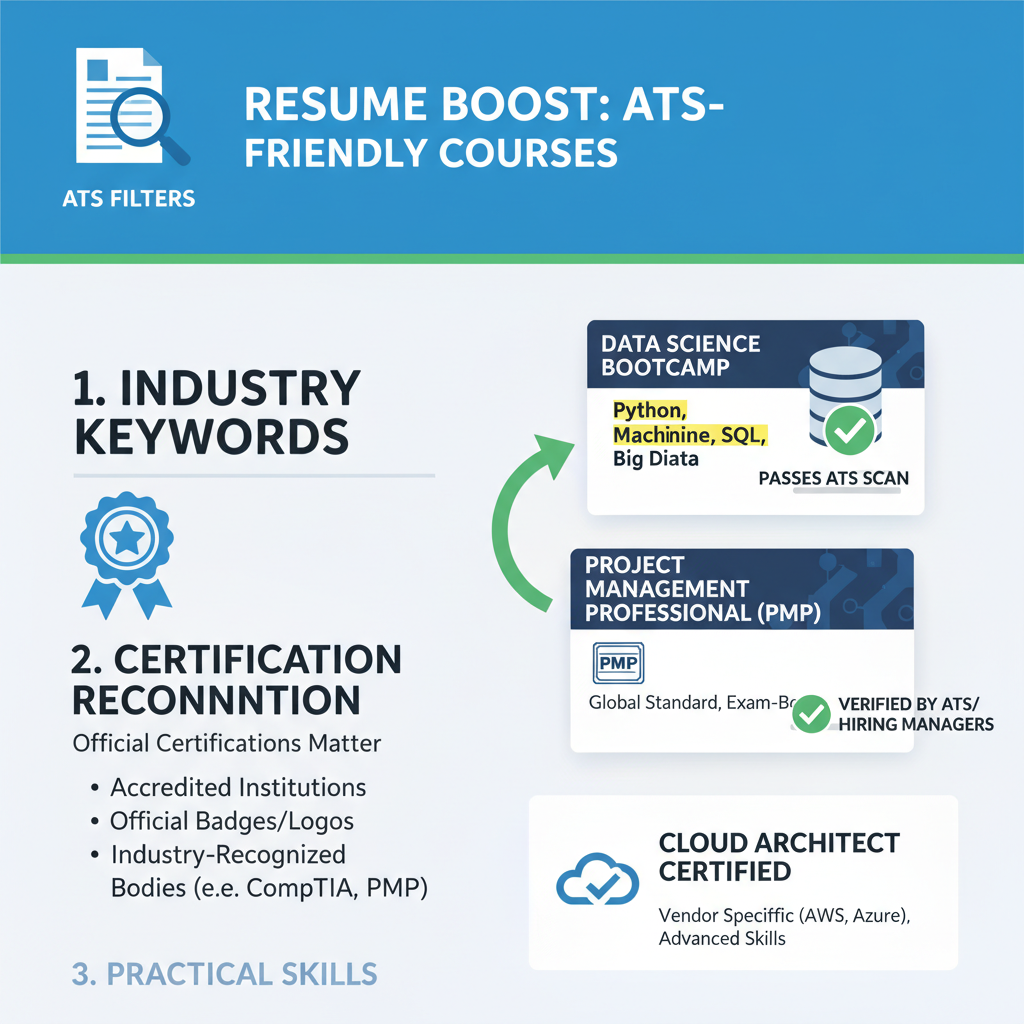
Selecting the right courses isn't just about learning new skills—it's about choosing credentials that hiring systems will recognize and value. In my years reviewing resumes, I've seen countless qualified candidates overlooked simply because their course selections didn't align with what Applicant Tracking Systems were programmed to identify. The good news? With a strategic approach, you can ensure your educational investments translate into resume strength.
Start with Industry-Relevant Keywords
Before enrolling in any course, analyze job descriptions in your target field. Look for recurring technical terms, software names, and skill requirements that appear across multiple postings. These keywords are often the same ones programmed into ATS filters.
When evaluating courses, check whether the course title, description, and certificate include these exact terms. A course on "Advanced Data Visualization Techniques" will register differently in an ATS than one simply called "Charts and Graphs," even if the content is similar. The language matters as much as the learning.
Align Courses with Your Career Path and Skill Gaps
Choose certifications that complement your desired career trajectory and fill specific gaps in your current skill set. If you're transitioning from a general business role into analytics, prioritize courses that bridge that gap with recognized methodologies and tools.
Conduct a honest self-assessment: What skills do your dream jobs require that you don't yet have? What abilities would make you immediately more valuable to employers? Focus on courses that address these specific needs rather than pursuing credentials simply because they're popular or free.
Prioritize Recognized Certifications and Platforms
While the content quality matters, so does the credential's recognition factor. Courses from established platforms tend to carry more weight with both ATS systems and human recruiters because these names are already programmed into filtering algorithms.
Look for courses that offer verifiable certificates with unique credential IDs that can be listed on your resume and verified by employers. Microcredentials, professional certificates, and industry-recognized certifications typically perform better in ATS scans than generic completion badges.
Match Course Content to Job Description Language
Here's a practical exercise: Take three job postings you'd love to apply for and highlight every skill, tool, or qualification mentioned. Then cross-reference this list with potential courses. The best resume-boosting courses will help you legitimately claim several of these highlighted items.
Pay attention to how skills are phrased in job descriptions. If employers consistently ask for "project management methodology" rather than "task coordination," choose courses that use the former terminology. This linguistic alignment ensures your resume speaks the same language as the ATS.
Evaluate the Balance Between Technical and Workplace Skills
High-income skills encompass both technical abilities and workplace competencies that employers value for their impact on business goals. While technical certifications often get the most attention, don't overlook courses in leadership, communication, or strategic thinking—especially if you're pursuing management roles.
The most effective resume combines hard skills that pass initial ATS filters with soft skills that appeal to human decision-makers. A well-rounded course selection strategy addresses both dimensions.
Sources
Technology and Data Skills: High-Impact Course Categories
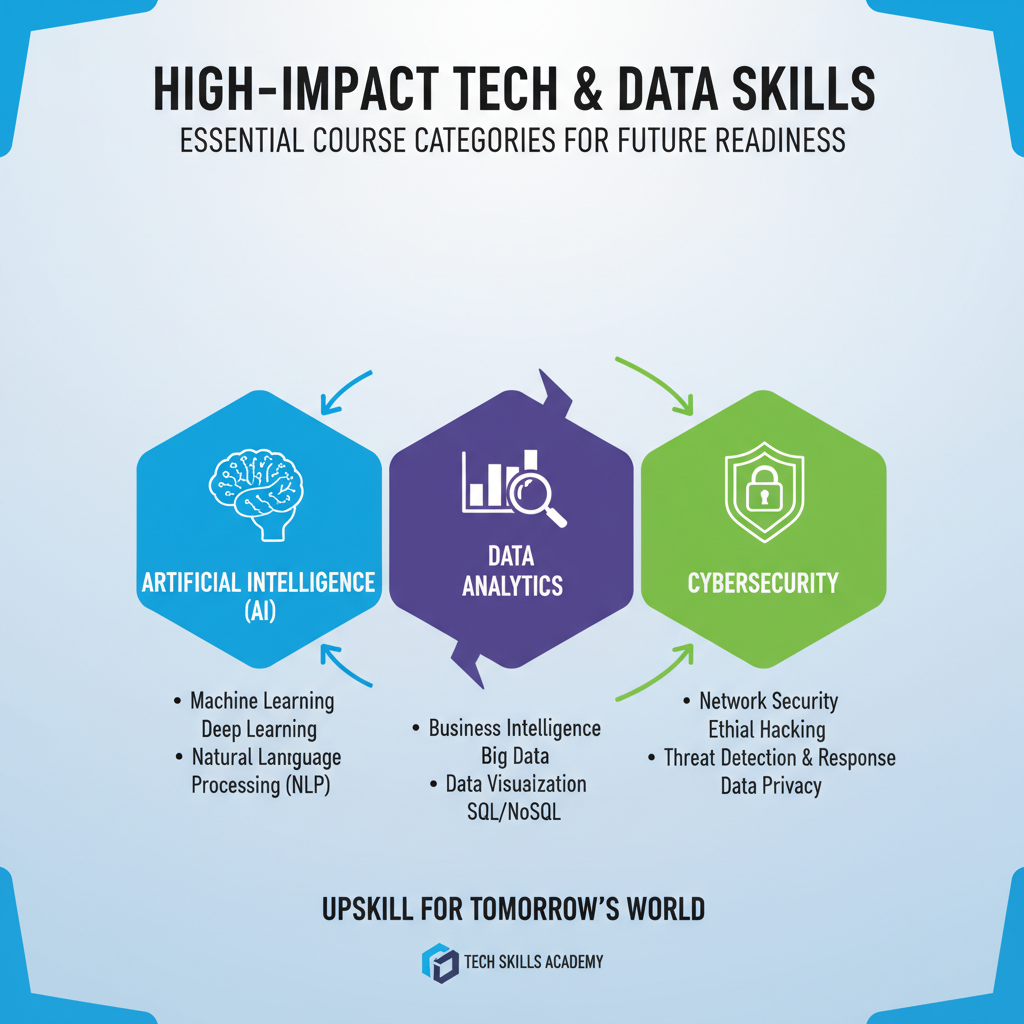
In 2026, technology and data skills remain the most sought-after qualifications across virtually every industry. From healthcare to finance, manufacturing to retail, organizations are prioritizing candidates who can leverage technology to drive innovation and make data-informed decisions. Adding these competencies to your resume signals to employers and ATS systems that you're equipped for the modern workplace.
The beauty of tech-focused resume boosting courses is their versatility. Whether you're transitioning into a technical role or simply want to enhance your current position with digital literacy, these skills translate across sectors and seniority levels.
Artificial Intelligence and Machine Learning
AI and machine learning courses have become essential for professionals looking to future-proof their careers. These programs typically cover foundational concepts like algorithms, neural networks, and predictive modeling. You don't need to become a data scientist to benefit—understanding how AI systems work helps you contribute to strategic discussions and automation initiatives.
Courses in this category often include practical applications such as natural language processing, computer vision, and recommendation systems. Professionals with AI knowledge earn competitive salaries, with AI engineers averaging $132,855 and AI business strategists earning approximately $134,671 in base pay. Even introductory certifications demonstrate your commitment to staying current with transformative technologies.
Data Analytics and Business Intelligence
Data analytics courses teach you how to extract meaningful insights from raw information. These programs typically cover data visualization, statistical analysis, SQL databases, and tools for business intelligence reporting. The ability to interpret data and communicate findings is valuable whether you're in marketing, operations, human resources, or executive leadership.
Professionals who develop data skills see strong career returns. Data analysts earn an average base pay of $111,037, while data scientists can command up to $164,818. More importantly, these skills make you indispensable in decision-making processes, as organizations increasingly rely on evidence-based strategies rather than intuition alone.
Cybersecurity Fundamentals
With cyber threats growing in sophistication and frequency, cybersecurity knowledge has moved from a niche specialty to a core competency. Courses in this domain cover network security, threat detection, risk assessment, and compliance frameworks. Even if you're not pursuing a dedicated security role, understanding these principles demonstrates responsibility and awareness.
Cybersecurity professionals, including information security analysts, earn an average base pay of $110,824. Beyond dedicated security positions, professionals in IT management, compliance, and even customer-facing roles benefit from understanding how to protect sensitive information and maintain trust.
Cloud Computing and Infrastructure
Cloud computing courses introduce you to platforms and services that power modern business operations. These programs typically cover cloud architecture, deployment models, storage solutions, and service management. Understanding cloud fundamentals is increasingly important as organizations migrate away from traditional on-premises systems.
Cloud skills are particularly valuable because they bridge technical and business domains. You'll learn about cost optimization, scalability planning, and vendor selection—competencies that appeal to both technical teams and executive leadership. Certifications in cloud computing demonstrate your ability to work with distributed systems and support digital transformation initiatives.
Why These Skills Matter Across Industries
Technology and data competencies are no longer confined to tech companies. Healthcare organizations need professionals who understand health informatics and patient data analytics. Financial institutions require expertise in algorithmic trading and risk modeling. Manufacturing companies seek talent versed in IoT and predictive maintenance.
By adding these course categories to your resume, you position yourself as a forward-thinking professional capable of contributing to innovation regardless of your primary field. The key is selecting courses that align with your industry's specific technology adoption trends while building broadly applicable foundational knowledge.
Sources
Business Leadership and Management: Courses for Career Advancement
Leadership and management skills are among the most sought-after competencies in 2026, signaling to employers that you're ready to take on strategic responsibilities. Whether you're aiming for a team lead position or preparing for executive-level roles, the right resume boosting courses in this category can demonstrate your readiness to drive organizational success.
These courses go beyond theoretical knowledge—they focus on practical application through business simulations, peer discussions, and real-world case studies. This hands-on approach ensures you can immediately apply what you learn to workplace challenges.
Leadership Development Programs
Leadership development courses help professionals transition from individual contributors to strategic leaders. These programs typically cover topics like emotional intelligence, change management, and decision-making under uncertainty. Many incorporate live sessions and one-on-one mentoring to provide personalized guidance as you develop your leadership style.
Reflective learning and peer discussions are crucial components of effective leadership training, allowing you to learn from diverse perspectives and develop the capabilities required to address complex organizational challenges. Look for programs that emphasize both self-awareness and practical leadership frameworks.
Project Management and Strategic Thinking
Project management courses remain essential for demonstrating your ability to deliver results on time and within budget. In 2026, employers value certifications that show proficiency in both traditional and agile methodologies. These courses teach you to coordinate cross-functional teams, manage stakeholder expectations, and navigate project complexities.
Strategic thinking courses complement project management skills by teaching you to align initiatives with broader business objectives. You'll learn to analyze market trends, identify growth opportunities, and make data-informed decisions that drive competitive advantage.
Business Analytics for Leaders
Business analytics courses equip you with the skills to interpret data and translate insights into actionable strategies. These programs cover data visualization, forecasting, and performance metrics—capabilities that are increasingly expected of managers across all departments.
By combining analytical rigor with business acumen, you position yourself as someone who can bridge the gap between data science teams and executive leadership. This skill set is particularly valuable as organizations become more data-driven in their decision-making processes.
Demonstrating Management Readiness on Your Resume
When selecting leadership and management courses, prioritize those that offer tangible outcomes like capstone projects, case study analyses, or business simulations. These deliverables provide concrete evidence of your capabilities and give you specific achievements to highlight during interviews.
The most impactful courses also help you develop soft skills like communication, conflict resolution, and team motivation—the human elements that distinguish effective leaders from merely competent managers.
Sources
Digital Marketing and Creative Skills: Standing Out in Competitive Fields
Digital marketing has become one of the most in-demand skill sets across virtually every industry. As businesses continue to expand their online presence, professionals who can demonstrate expertise in marketing automation, SEO, content strategy, and creative technologies stand out significantly on resumes. These skills are no longer confined to marketing departments—they're essential for product managers, entrepreneurs, business analysts, and anyone looking to drive growth in their organization.
The landscape of digital marketing education has evolved dramatically. Many valuable certifications are now self-paced, online, and even available for free, making them highly accessible for professionals at any career stage. The right certificate program arranges your existing skills while supplementing them with the new knowledge needed for career advancement, particularly as the field shifts toward strategic thinking and data interpretation.
Marketing Automation and Analytics
Marketing automation platforms have become central to modern business operations. Courses covering email marketing automation, customer relationship management (CRM) systems, and marketing analytics demonstrate your ability to drive efficiency and measure results. These skills are particularly valuable because they bridge the gap between creative marketing and data-driven decision-making.
Look for programs that teach you how to set up automated campaigns, segment audiences, and interpret performance metrics. Understanding how to track conversion rates, analyze customer journeys, and optimize campaigns based on data makes you invaluable to employers who need to justify marketing spend and demonstrate ROI.
SEO and Content Strategy
Search engine optimization remains a critical skill as businesses compete for online visibility. Courses that cover keyword research, on-page optimization, technical SEO, and content strategy show employers you understand how to drive organic traffic and create content that ranks. This expertise is particularly relevant as search algorithms become more sophisticated and user-focused.
Content strategy courses complement SEO training by teaching you how to plan, create, and distribute content that aligns with business goals. These programs often cover editorial calendars, audience research, content governance, and performance measurement—skills that translate across industries and demonstrate strategic thinking.
UX/UI Design and Creative Technology
User experience and interface design courses have become increasingly valuable, even for non-designers. Understanding the principles of user-centered design, wireframing, prototyping, and usability testing shows employers you can contribute to product development and customer experience initiatives. These skills are particularly relevant in tech companies, startups, and any organization focused on digital products.
Creative technology courses covering design software, video editing, graphic design, and visual storytelling round out your digital skill set. Even basic proficiency in tools commonly used for creating presentations, social media content, or marketing materials can differentiate you from candidates who lack these capabilities.
Building a Strategic Marketing Skillset
The most effective approach is to combine technical marketing skills with strategic thinking. Courses that teach you how to develop marketing strategies, understand customer psychology, and align marketing initiatives with business objectives demonstrate that you're not just executing tactics—you're thinking strategically about growth and competitive positioning.
Consider certifications that cover integrated marketing communications, brand management, or digital transformation. These programs show you understand how various marketing channels work together and how marketing fits into broader business strategy. This strategic perspective is what separates junior marketers from those ready for leadership roles.
Sources
Professional Development and Soft Skills: The Overlooked Resume Enhancers
While technical expertise often dominates resume discussions, soft skills and professional development competencies are increasingly what set candidates apart in competitive hiring processes. Employers recognize that technical knowledge means little without the interpersonal abilities to collaborate effectively, communicate ideas clearly, and navigate complex workplace dynamics.
Why Soft Skills Matter More Than Ever
In 2026, most positions require effective collaboration across teams, departments, and even time zones. Employers appreciate candidates who can demonstrate teamwork skills, as most jobs require effective collaboration. Courses focused on communication, emotional intelligence, and negotiation provide tangible proof that you've invested in becoming a well-rounded professional—not just a technical specialist.
These competencies also help you pass ATS filters when job descriptions emphasize "strong communication skills," "leadership potential," or "team player" qualities. Including relevant coursework in these areas signals to both automated systems and human recruiters that you possess the interpersonal foundation necessary for workplace success.
High-Impact Soft Skill Course Categories
Communication and Presentation SkillsCourses that develop your ability to present ideas persuasively, write professionally, and facilitate meetings demonstrate capabilities that translate across all industries. These skills become especially valuable as you advance into roles requiring stakeholder management or client-facing responsibilities.
Emotional Intelligence and Leadership DevelopmentProfessional development programs focused on self-awareness, empathy, and relationship management show hiring managers that you understand the human side of business. Leadership courses—even if you're not in a management role—indicate ambition and readiness for increased responsibility.
Negotiation and Conflict ResolutionDemonstrating training in negotiation tactics or conflict management suggests you can handle difficult conversations and reach productive outcomes. These competencies are particularly valued in roles involving vendor relationships, contract discussions, or team coordination.
Customer Service and Client RelationsA course in improving customer service skills shows that you know how to handle customer concerns and create positive experiences, which is crucial in many industries. This training applies broadly, from client-facing positions to internal support roles where stakeholder satisfaction matters.
Complementing Technical Skills with Professional Development
The most compelling resumes balance hard technical skills with evidence of professional growth. If your background is heavy on data analysis or software development, adding coursework in project management or cross-functional collaboration rounds out your profile. Conversely, if you come from a relationship-focused role, supplementing with structured problem-solving or analytical thinking courses demonstrates versatility.
Consider how these skills appear in real-world applications. For instance, a candidate might note: "Developed a GenAI summarizer that cut weekly research time by 40%." This example showcases both technical capability and the soft skill of identifying process improvements—a combination that resonates with employers seeking adaptable team members.
Selecting Courses That Enhance Your Professional Brand
When choosing professional development courses, prioritize those offering recognized credentials or certificates from reputable platforms. Look for programs that include practical applications, case studies, or peer collaboration components—these experiential elements provide concrete examples you can reference in interviews.
Align your course selection with your career trajectory. If you're targeting management positions, leadership and strategic thinking courses carry weight. For individual contributor roles requiring cross-functional work, focus on communication and collaboration training. Always ensure the course titles and descriptions use industry-standard terminology that will resonate with ATS algorithms and hiring managers alike.
Sources
Industry-Specific Certifications: Targeted Courses for Your Field
While general skills courses add value to any resume, industry-specific certifications often carry the most weight with hiring managers and ATS systems in specialized fields. These credentials demonstrate not just knowledge, but a commitment to professional standards and ongoing expertise in your sector.
Earning recognized credentials shows initiative and sets you apart from other applicants. In competitive industries like healthcare, finance, engineering, and education, the right certification can be the difference between landing an interview and being passed over.
Healthcare and Medical Certifications
Healthcare professionals benefit from certifications that validate clinical competencies and regulatory knowledge. Nurses pursuing certifications in specialized areas like critical care, oncology, or informatics enhance their marketability significantly. Medical coders and billing specialists gain credibility through credentials that demonstrate mastery of current coding standards and compliance requirements.
These certifications often align directly with ATS keywords that healthcare employers prioritize, making your resume more likely to pass initial screening filters.
Finance and Accounting Credentials
The finance sector places high value on recognized certifications that signal technical proficiency and ethical standards. Credentials in financial planning, risk management, and accounting demonstrate specialized knowledge that employers actively seek. Project management certifications also carry substantial weight in this field, with research showing that certified managers can command higher compensation.
When listing these credentials on your resume, include the full certification name and issuing organization to ensure ATS recognition.
Engineering and Technical Certifications
Engineering disciplines benefit from certifications that validate expertise in specific technologies, methodologies, or safety standards. Software engineers gain advantage through credentials in cloud platforms, cybersecurity, or development frameworks. Civil and mechanical engineers strengthen their profiles with certifications in project management, quality assurance, or industry-specific software tools.
These technical certifications often include the exact keywords that ATS systems are programmed to identify in engineering roles.
Education and Training Credentials
Educators and corporate trainers enhance their resumes through certifications in instructional design, educational technology, and specialized teaching methodologies. Credentials that demonstrate proficiency in learning management systems or assessment design are particularly valuable as education continues its digital transformation.
These certifications signal to employers that you're equipped to meet modern educational challenges and adapt to evolving pedagogical approaches.
Digital Marketing Certifications
Marketing professionals stand out with certifications that validate expertise in specific channels and strategies. SEO certification programs validate skills in various techniques, including keyword research, on-page optimization, and analytics, making them a strong selling point on resumes. Credentials in social media marketing, content strategy, and marketing automation similarly demonstrate practical skills that employers can immediately leverage.
The key is selecting certifications that align with your target roles and include terminology that matches job descriptions in your field.
Choosing the Right Industry Certification
Before investing time and money in a certification program, research which credentials carry the most weight in your specific industry. Review job postings for your target roles and note which certifications appear most frequently in requirements or preferred qualifications. Connect with professionals in your field to understand which credentials have opened doors for them.
Prioritize certifications from recognized industry bodies or well-established educational institutions, as these carry more credibility with both human recruiters and ATS systems.
Sources
How to List and Leverage Courses on Your Resume
Once you've invested time and effort into resume boosting courses, the next critical step is presenting them effectively on your resume. Strategic placement and formatting can transform a simple course listing into a compelling demonstration of your commitment to professional growth and skill development.
Optimal Placement for Course Listings
Where you position your courses on your resume depends on their relevance and your career stage. For recent graduates or career changers, consider creating a dedicated "Professional Development" or "Relevant Coursework" section near the top of your resume, just below your summary. This placement immediately signals to hiring managers that you're actively building skills aligned with the role.
For experienced professionals, integrate courses into your existing "Education" section or create a "Certifications & Professional Development" section positioned after your work experience. This approach maintains focus on your practical accomplishments while still highlighting your continuous learning mindset.
Formatting and Keyword Optimization
Present each course with clarity and consistency. Include the course title, platform or institution, completion date, and any certifications earned. Optimize your listings with keywords that align with the job description and pass through applicant tracking systems.
List recent courses, certifications, or self-taught skills relevant to the role on your resume to demonstrate adaptability and continuous learning. Focus on courses that directly address the technical skills, software proficiencies, or methodologies mentioned in the target job posting. This strategic alignment increases your chances of making it past initial screening filters.
Quantifying Learning Outcomes
Transform passive course listings into active demonstrations of value by quantifying your accomplishments. Rather than simply stating "Completed Data Analytics Course," showcase the impact: "Completed Advanced Data Analytics Course, applying Python and SQL skills to analyze datasets exceeding 10,000 records in capstone project."
Quantify your accomplishments in previous roles to demonstrate impact. Use a formula that highlights your contributions effectively by connecting the skill learned to tangible results. This approach shows employers not just what you learned, but how you can apply it to drive business outcomes.
Integrating Courses Beyond Your Resume
Your resume is just one touchpoint in your job search strategy. Leverage your coursework across your entire professional brand. In cover letters, reference specific courses when explaining why you're qualified for the role, particularly when addressing potential skill gaps or career transitions.
On LinkedIn, add completed courses to your "Licenses & Certifications" section and share course completion posts to increase visibility. Update your headline and summary to reflect newly acquired skills, and engage with content related to your learning areas to demonstrate ongoing expertise. This multi-channel approach reinforces your commitment to growth and ensures hiring managers encounter consistent evidence of your qualifications at every interaction point.
Sources
Conclusion
In 2026, the job market rewards those who demonstrate adaptability and a commitment to continuous learning. Strategic course selection isn't just about adding lines to your resume—it's about closing skill gaps, staying relevant in your field, and positioning yourself as a forward-thinking professional. Employers increasingly value candidates who take initiative in their own development, recognizing that proactive learners bring fresh perspectives and up-to-date expertise to their teams.
Throughout my years in recruitment and career coaching, I've witnessed countless professionals transform their career trajectories by investing in the right resume boosting courses. The key is to approach your learning journey with intention: assess where your skills need strengthening, choose courses that align with both your career goals and industry demands, and ensure your selections include keywords that pass ATS filters. Whether you're pivoting to a new field, advancing in your current role, or simply staying competitive, the courses you complete signal to employers that you're committed to growth and excellence.
Start by conducting an honest skills inventory. Identify gaps between where you are and where you want to be, then select courses that bridge those gaps while also addressing emerging trends in your industry. Remember that completing short courses proves you're proactive and committed to self-improvement, qualities that employers consistently value. Programs emphasizing hands-on training, portfolio development, and practical application will serve you better than purely theoretical offerings.
The investment you make in your professional development today will compound over time, opening doors to opportunities you might not yet envision. Take action now—your future career self will thank you for the strategic choices you make in 2026.
Sources

Written by
Emily Johnson
Published March 2, 2026 · 26 min read
Emily Johnson is a seasoned career strategist with over a decade of experience in recruitment and talent acquisition. With a background in human resources, she excels at helping professionals refine their job search strategies, from crafting compelling resumes to mastering interview techniques. As an expert in Applicant Tracking Systems (ATS), Emily is dedicated to guiding individuals toward their dream careers.
Want this kind of read on your résumé?
We'll tell you what's actually working, what's holding you back, and what to fix — in plain English.
Get My Job Match Score