

Resume Optimization Alternative: The Simple Expert Strategy
Discover the best resume optimization alternative that prioritizes narrative over keywords for stronger job applications and better results.
 Emily Johnson
Introduction
Key Takeaways
- Resume translation strategy focuses on crafting a compelling narrative rather than keyword stuffing
- Traditional resume optimization alone may not capture your unique professional value
- Strategic resume writing positions your experience in language that resonates with hiring managers
- This approach balances technical requirements with human-centered storytelling
- The goal is to translate your career into a story of value, relevance, and strategic fit
For years, job seekers have been told that resume optimization is the key to landing interviews. The formula seemed simple: identify keywords in the job description, sprinkle them throughout your resume, and wait for the callbacks. But what if this approach is missing something fundamental?
I remember working with clients who had spent countless hours tweaking their resumes for applicant tracking systems, yet still weren't getting results. The turning point came when we shifted our focus from optimization to translation—moving beyond keyword matching to create narratives that demonstrated unique value and strategic alignment with company missions.
Resume optimization means improving how well your resume communicates value to both screening systems and human reviewers. It's not about gaming the system, but about presenting your professional story clearly so hiring systems and recruiters understand what you bring to the table. However, optimization alone often falls short because it treats your resume as a technical document rather than a strategic communication tool.
The Limitation of Traditional resume optimization alternative Approaches
The traditional approach to resume optimization focuses heavily on ATS-friendliness and keyword density. While these technical factors matter, they don't capture the full picture of who you are as a professional. Your resume needs to pass through automated systems, yes—but it also needs to compel a human being to pick up the phone and call you.
This is where resume translation strategy comes in. Instead of simply optimizing for algorithms, translation strategy asks: How do I convert my experiences into language that demonstrates strategic value? How do I position myself not just as qualified, but as the right fit for this specific role and organization?
A Different Approach to Resume Success
Resume translation strategy represents a holistic approach that goes beyond technical optimization. It involves understanding the employer's needs, the industry's language, and the strategic value you offer—then translating your career history into a narrative that addresses all three.
This doesn't mean abandoning keywords or ignoring ATS requirements. Rather, it means placing those technical elements within a larger framework of strategic storytelling. Your resume becomes both technically sound and strategically compelling—a document that works for machines and moves humans to action.
In the sections that follow, we'll explore how resume translation strategy differs from traditional optimization, when each approach makes sense, and how to implement a translation-focused strategy in your own job search. The goal is simple: stop merely optimizing and start translating your career into a compelling narrative that opens doors.
Sources
Understanding Resume Translation Strategy
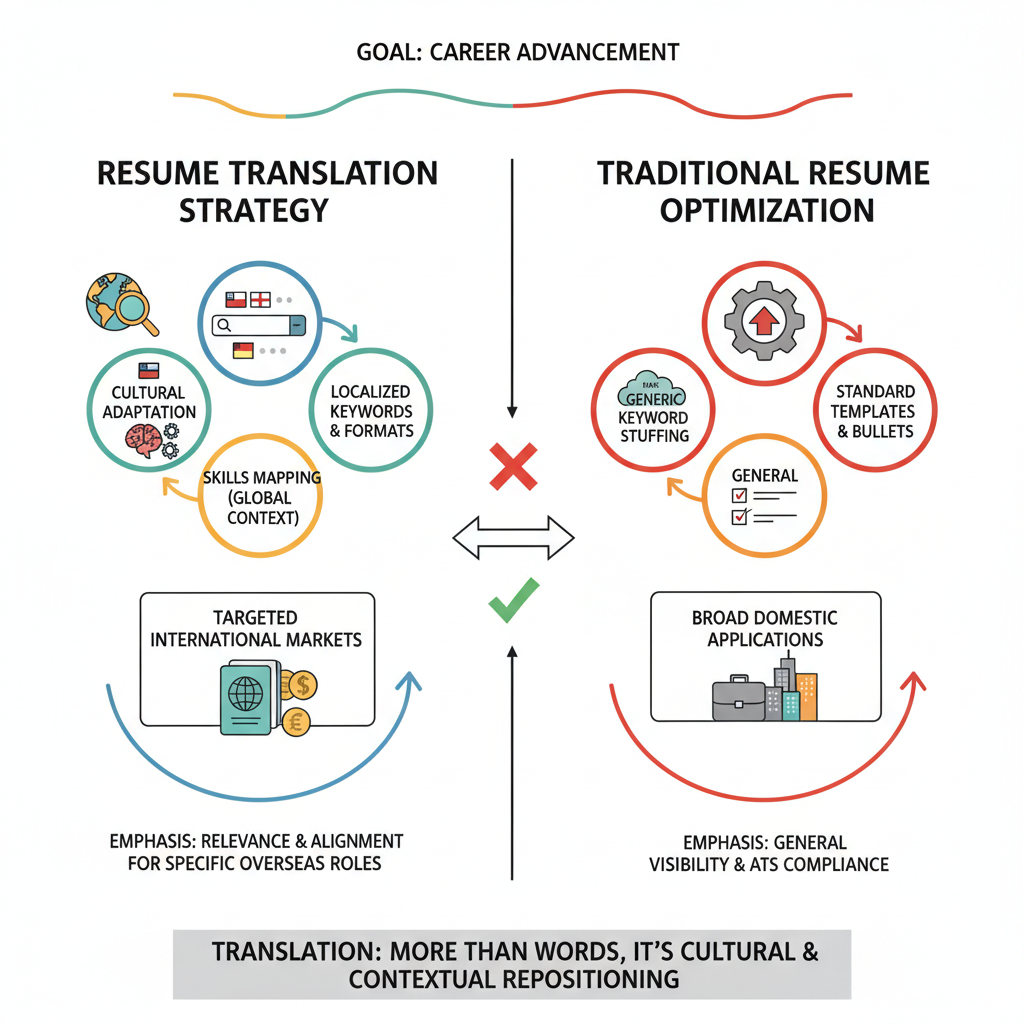
Resume translation strategy represents a fundamental shift in how we approach career documentation. Rather than focusing solely on keyword density and ATS compatibility, this approach prioritizes translating your professional experiences into a narrative that resonates with human decision-makers. It's about communicating value in a language that hiring managers understand and appreciate.
Traditional resume optimization focuses on improving how well your resume communicates value to both screening systems and human reviewers, addressing both technical and content factors. While this holistic approach ensures your resume is ATS-friendly and recruiter-friendly, translation strategy takes a different path. It starts with the human reader first, then adapts for technical requirements.
The Core Difference
The distinction lies in starting point and priority. Resume optimization begins with job descriptions and keywords, working backward to fit your experience into those parameters. Translation strategy begins with your authentic professional story, then strategically positions it to align with employer needs and company missions.
Think of it this way: optimization asks "What keywords does this job posting contain?" Translation asks "What problem does this employer need solved, and how have I solved similar problems before?" The first produces a technically compliant document. The second produces a compelling narrative that positions you as the solution.
Beyond Keywords
Specialized tools combine technical analysis with content guidance, understanding both ATS requirements and hiring manager priorities. Translation strategy leverages this understanding differently. Instead of stuffing keywords, it weaves relevant terminology naturally into achievement-focused narratives that demonstrate impact.
This approach doesn't abandon keywords entirely—it contextualizes them. Rather than listing "project management" as a skill, translation strategy might describe how you "managed cross-functional teams through a complex product launch, delivering results two weeks ahead of schedule." The keyword is present, but it's embedded in proof of capability.
Strategic Positioning
Resume translation strategy emphasizes strategic positioning in relation to specific roles and organizations. It requires research into company culture, team dynamics, and organizational challenges. This intelligence informs how you frame your experiences, ensuring they speak directly to what matters most to your target employer.
The result is a resume that reads less like a keyword list and more like a strategic business case for your candidacy. It demonstrates not just what you've done, but how your unique combination of experiences makes you the right fit for this specific opportunity.
Sources
Resume Optimization Alternative
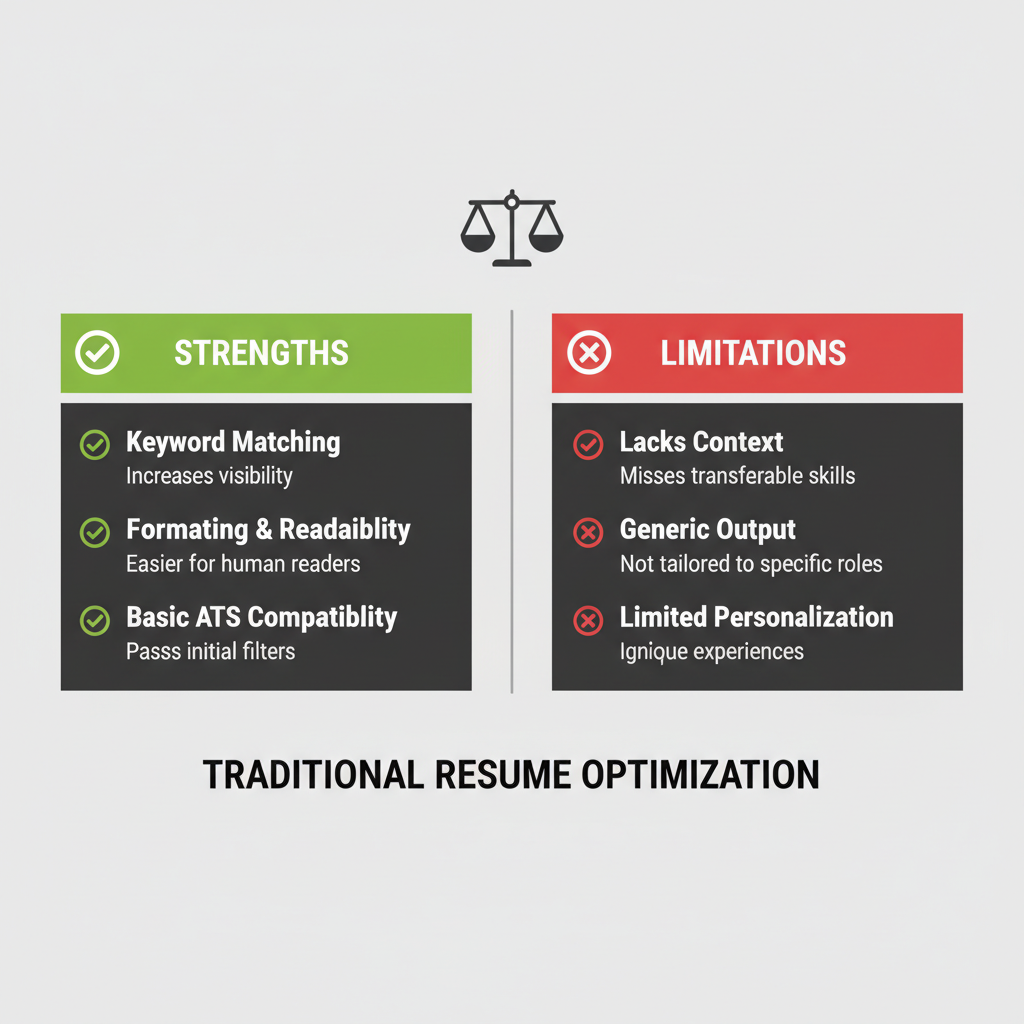
Resume optimization has long been the go-to strategy for job seekers navigating today's competitive hiring landscape. The approach is straightforward: align your resume with job descriptions by incorporating specific keywords, formatting for Applicant Tracking Systems, and ensuring every term matches what recruiters are searching for. It's a tactical method designed to get past the digital gatekeepers that screen applications before human eyes ever see them.
The Core Principles of Resume Optimization
At its heart, resume optimization focuses on keyword density and ATS compatibility. Job seekers are encouraged to mirror the language found in job postings, ensuring that their resumes include exact phrases like "project management," "data analysis," or "customer relationship management." The goal is simple: make sure the ATS recognizes your qualifications and ranks your resume highly enough to forward it to a recruiter.
This method also emphasizes formatting choices that machines can parse easily. That means avoiding tables, graphics, or creative layouts that might confuse automated systems. Instead, optimization advocates for clean, simple formats with standard section headings and bullet points that ATS software can read without issue.
The Strengths of Traditional Optimization
Resume optimization does offer real advantages, particularly in high-volume hiring environments. When companies receive hundreds or thousands of applications for a single position, ATS software becomes essential for narrowing the field. A well-optimized resume increases your chances of making it through that initial screening.
For candidates applying to roles with very specific technical requirements, optimization can be effective. If a job posting explicitly requires proficiency in particular software, certifications, or methodologies, including those exact terms ensures the ATS flags your application as relevant. In industries where qualifications are standardized, this keyword-matching approach can work reasonably well.
The Limitations That Matter
Despite its benefits, resume optimization has significant drawbacks that often go unaddressed. Studies show that up to 75% of resumes are rejected by ATS before a human ever sees them. This high rejection rate reveals a fundamental problem: optimization alone doesn't guarantee success, and it can actually work against you if taken too far.
The biggest limitation is that optimization prioritizes machines over people. When you focus exclusively on keyword density and ATS compliance, your resume can become a lifeless list of buzzwords that fails to tell a compelling story. Hiring managers who do receive your resume may find it generic, difficult to distinguish from dozens of other applications, or lacking the context that demonstrates real value.
Another challenge is the constant evolution of ATS technology. What works for one system may not work for another, and the rules change as software updates roll out. Job seekers can find themselves chasing a moving target, spending hours tweaking their resumes for marginal gains while missing opportunities to differentiate themselves in more meaningful ways.
When Optimization Falls Short
Resume optimization struggles most in situations where your value proposition doesn't fit neatly into standard categories. If you're making a career transition, have a non-traditional background, or bring unique combinations of skills to the table, keyword matching may actually obscure your strengths rather than highlight them.
Similarly, optimization doesn't account for company culture, team dynamics, or the specific challenges a hiring manager needs to solve. A resume stuffed with keywords might pass the ATS test, but it won't necessarily demonstrate that you understand the role's context or can deliver results that matter to the organization.
The traditional approach also assumes that job descriptions are well-written and accurately reflect what employers truly need. In reality, many postings are vague, outdated, or created by HR teams without deep input from hiring managers. Optimizing for these descriptions can lead you to emphasize the wrong things entirely.
Sources
Strategic Resume Writing
Strategic resume writing goes beyond simply listing your work history—it's about deliberately positioning yourself for the specific roles you're targeting. This approach complements the translation strategy by ensuring that every element of your resume serves a clear purpose in advancing your candidacy.
The foundation of strategic resume writing lies in understanding that your resume is a marketing document, not a comprehensive career autobiography. You're not obligated to include every job you've ever held or every skill you've acquired. Instead, you strategically select and present the experiences that best demonstrate your fit for your target role.
Prioritizing High-Impact Achievements
One of the most powerful principles of strategic resume writing is making your most important achievements immediately visible in the top third of your resume. Recruiters and hiring managers often spend just seconds on an initial scan, so your strongest value propositions need to be front and center.
Consider leading with a summary or profile section that captures your unique value, followed by your most impressive and relevant accomplishments. This strategic placement ensures that even if a reader doesn't make it through your entire resume, they've already encountered your strongest selling points.
Structuring for Clarity and Impact
Strategic resume writing also means presenting information in a way that's easy to scan and digest. Use bullet points or concise statements to outline your responsibilities and achievements for each role, focusing on action verbs paired with quantifiable results. This structure allows readers to quickly grasp what you've accomplished without wading through dense paragraphs.
Measurable results are particularly valuable because they provide concrete evidence of your impact. Numbers and outcomes resonate with both automated systems and human readers, making your achievements more credible and memorable. When you can demonstrate that you increased revenue, reduced costs, improved efficiency, or achieved other quantifiable results, you're providing the kind of evidence that strengthens your candidacy.
Aligning Content with Target Roles
The strategic element comes into play when you carefully align your resume content with the specific requirements and priorities of your target positions. This doesn't mean fabricating experience you don't have—it means emphasizing the aspects of your background that are most relevant to where you're heading.
For each position you're applying to, ask yourself: Which of my experiences best demonstrate my ability to excel in this role? What achievements show I can deliver the results this employer needs? By answering these questions, you can tailor your presentation without compromising authenticity.
Strategic resume writing transforms your career history into a compelling argument for why you're the right candidate. When combined with the translation strategy's focus on narrative and relevance, you create a resume that works on multiple levels—passing initial screenings while also resonating deeply with the decision-makers who ultimately determine your fate.
Sources
Comparison of Strategies
Choosing between resume optimization and resume translation isn't about picking a winner—it's about understanding which approach aligns with your career goals and the specific roles you're targeting. Both strategies have distinct strengths and limitations that can significantly impact your job search success.
Resume Optimization: The Technical Approach
Resume optimization focuses primarily on passing Applicant Tracking Systems by strategically placing keywords from job descriptions throughout your resume. This approach treats your resume as a technical document designed to satisfy algorithmic requirements. The goal is simple: get past the initial screening.
The strength of this method lies in its ability to navigate automated filters. However, it comes with notable drawbacks. When you prioritize keyword density over narrative flow, your resume can read like a checklist rather than a compelling career story. While you might pass the ATS, you may not capture the hiring manager's attention when a human finally reviews your application.
Resume Translation Strategy: The Narrative Approach
The resume translation strategy takes a fundamentally different path. Instead of focusing on keyword placement, it emphasizes translating your experiences into language that resonates with both hiring managers and organizational needs. This approach positions you strategically in relation to the role while maintaining readability and authenticity.
Translation prioritizes context over keywords. Rather than simply listing "project management" because it appears in the job description, you demonstrate how you managed cross-functional teams to deliver measurable outcomes. The focus shifts from what you did to the value you created and how that value aligns with your target company's mission.
Key Differences at a Glance
The optimization approach asks: "Does my resume contain the right keywords?" The translation approach asks: "Does my resume communicate why I'm the right strategic fit?"
Optimization works well for highly standardized roles where technical qualifications are paramount. Translation excels when differentiation matters—when multiple candidates have similar credentials but only one can tell a compelling story about their unique impact.
Timing also differs. Optimization is often a faster process focused on matching visible requirements. Translation requires deeper research into company culture, team dynamics, and strategic priorities, making it more time-intensive but potentially more effective for competitive positions.
Finding the Right Balance
The most effective approach often incorporates elements of both strategies. You need enough relevant terminology to pass initial screenings, but you also need a narrative that compels human decision-makers to choose you over similarly qualified candidates.
Consider your industry context. Technical fields with clear qualification requirements may benefit more from optimization, while creative or leadership roles often demand the differentiation that translation provides. The key is understanding when to emphasize technical alignment versus strategic positioning.
Sources
Who Should Choose What
Choosing between resume optimization and resume translation isn't a one-size-fits-all decision. Your career stage, industry, and specific goals should guide which strategy you prioritize. Understanding when each approach works best can save you time and increase your success rate in landing interviews.
Early-Career Professionals and Career Changers
If you're just starting out or transitioning to a new field, resume translation offers significant advantages. Early-career professionals often lack extensive keyword-rich experience, so focusing on narrative helps you demonstrate transferable skills and potential. Career changers benefit from translation because it allows you to reframe your background in terms that resonate with your target industry, rather than getting filtered out by ATS systems looking for specific technical terms you may not yet have.
For remote positions, remember that employers increasingly value self-management skills and familiarity with virtual collaboration tools. Translating your experiences to highlight these competencies can set you apart, even if your previous roles weren't explicitly remote.
Mid-Level Professionals in Competitive Fields
Mid-career professionals often benefit from a hybrid approach. If you're applying to highly structured organizations or technical roles with clear qualification requirements, some level of optimization ensures your resume passes initial screening filters. However, translation becomes critical when you're competing against candidates with similar credentials. Your ability to craft a compelling narrative about your unique contributions and strategic value can be the differentiator that gets you called in for an interview.
Tailoring your resume for each position remains important regardless of which strategy you emphasize. Adjust your skills section to reflect what the employer needs, and modify your professional history to align with the specific job description while maintaining your authentic narrative.
Senior Leaders and Executive Candidates
At the executive level, resume translation should be your primary focus. Senior hiring decisions are rarely made by ATS systems alone—they involve human decision-makers who want to understand your leadership philosophy, strategic vision, and cultural fit. Your resume needs to tell a coherent story about how you've driven organizational change, not just list keywords.
That said, don't completely abandon optimization. Even executive resumes may pass through initial screening systems, so including relevant industry terminology naturally within your narrative ensures you're not filtered out before human eyes review your application.
Practical Decision Framework
Ask yourself these questions: Are you applying to roles where technical qualifications are non-negotiable? Lean toward optimization first, then layer in narrative. Are you targeting positions where cultural fit and soft skills matter most? Prioritize translation. Are you in a saturated market with hundreds of applicants? You'll need both—optimization to get through the gate, and translation to stand out once you're in the pool.
Ultimately, the most successful approach recognizes that these strategies aren't mutually exclusive. The key is knowing which to emphasize based on your unique situation and the specific opportunities you're pursuing.
Sources
Frequently Asked Questions
What's the main difference between resume optimization and resume translation?
Resume optimization focuses on keyword placement to pass automated screening systems, while resume translation emphasizes crafting a narrative that demonstrates your value to hiring managers. Translation strategies integrate relevant terms naturally within achievement statements rather than stuffing keywords throughout your document.
Will a translated resume still pass ATS screening?
Yes, when done correctly. The translation approach incorporates industry-relevant language naturally within your accomplishments and experience descriptions. This allows your resume to satisfy automated filters while remaining compelling to human readers. The key is weaving keywords into quantified achievement statements rather than listing them artificially.
How do I know which approach is right for my situation?
Consider your career stage and goals. If you're applying to highly structured corporate roles with rigid requirements, some optimization may be necessary. However, if you're targeting positions where cultural fit, strategic thinking, or creative problem-solving matter, translation strategies typically yield better results. Most professionals benefit from a hybrid approach that prioritizes narrative while incorporating essential terminology.
Can I use templates with a translation strategy?
Templates can provide structure, but customization is essential. Generic templates without personalization make applications blend together rather than stand out. Use templates as starting points, then adapt them to reflect your unique experiences and the specific value you bring to each role.
How long does it take to translate a resume effectively?
Expect to invest more time initially than simple keyword optimization. Translating your experiences into compelling narratives requires reflection on your achievements, understanding employer needs, and crafting connections between the two. However, this upfront investment typically reduces the total number of applications needed, as each submission becomes more targeted and effective.
Should I completely abandon keywords?
No. Keywords remain important for searchability and relevance. The difference lies in how you incorporate them. Rather than forcing keywords into every section, integrate them naturally within context that demonstrates how you've applied those skills or delivered results. This satisfies both automated systems and human reviewers.
What if my industry is highly technical?
Technical fields still benefit from translation strategies. While you'll need industry-specific terminology, focus on translating technical accomplishments into business outcomes. Explain not just what technologies you used, but what problems you solved and what value you created. This approach resonates with both technical hiring managers and non-technical decision-makers.
Sources
Real-World Examples
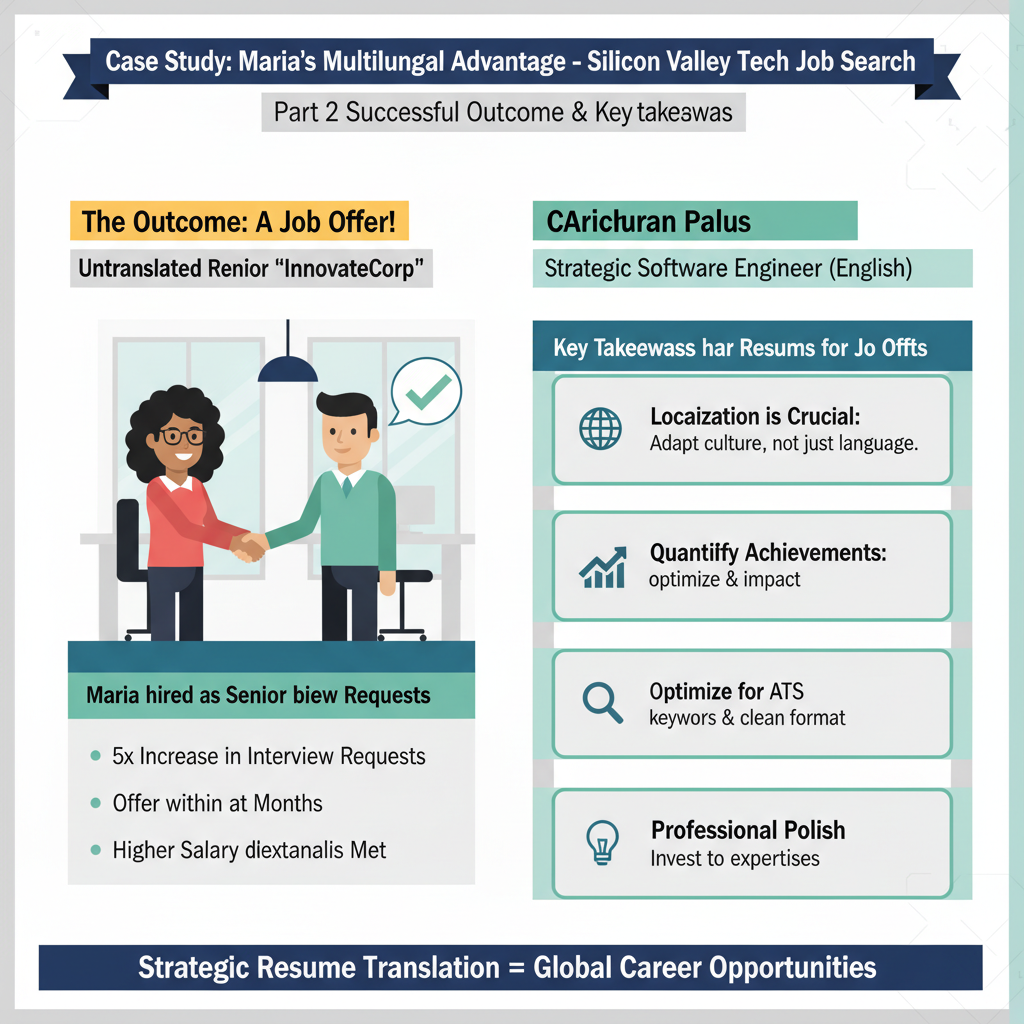
Seeing the resume translation strategy in action helps illustrate its power. Let me share a few scenarios where candidates moved beyond traditional optimization and achieved breakthrough results.
The Career Switcher: From Skills to Story
Consider a professional transitioning from education to corporate training. Rather than listing teaching skills in isolation, they translated their classroom management experience into "facilitated learning environments for diverse audiences" and "developed curriculum frameworks that improved knowledge retention." This narrative approach positioned them as a strategic learning designer, not just a teacher looking for a new job.
The functional resume format proved particularly effective here. By grouping skills thematically—instructional design, stakeholder engagement, performance metrics—the candidate created a compelling story that hiring managers could immediately connect to their business needs.
The Budget-Conscious Job Seeker: Tools That Support Translation
Another example involves a recent graduate who couldn't afford premium resume services. They discovered free tools that supported the translation approach rather than just keyword stuffing. By focusing on how their internship experiences translated to full-time value, they crafted a resume that spoke to hiring managers' priorities.
The key was understanding that resume translation isn't about expensive software—it's about strategic thinking. They asked themselves: "What business problem did I solve?" rather than "What keyword should I include?"
The Experienced Professional: Beyond the ATS Game
A mid-career marketing professional was frustrated with the traditional optimization approach. Despite having the right keywords, they weren't landing interviews. When they shifted to translating their campaign management experience into business outcomes—"drove 40% revenue growth through strategic audience segmentation"—the response rate improved dramatically.
This candidate stopped treating their resume as an ATS checklist and started treating it as a strategic positioning document. The difference wasn't in what they had done, but in how they translated those experiences into the language of value.
Common Threads Across Success Stories
These examples share several characteristics. Each candidate moved beyond surface-level keyword matching to deeper narrative construction. They asked how their experiences translated to the specific challenges their target employers faced. They prioritized human readability over algorithmic optimization.
The resume translation strategy doesn't ignore technical requirements entirely—it simply refuses to let them dominate the storytelling process. When you translate rather than optimize, you create a document that works for both systems and people.
Sources
Conclusion
The shift from resume optimization to resume translation represents more than a tactical change—it's a fundamental rethinking of how you present your professional story. Rather than chasing keyword density and ATS algorithms, the translation approach focuses on clarity, relevance, and human connection. Your resume becomes a strategic document that speaks directly to hiring managers while still respecting the technical requirements of modern hiring systems.
Moving Forward with Translation
As you craft your next application, remember that presenting your professional story clearly helps both hiring systems and recruiters understand your value. The goal isn't to abandon best practices, but to elevate them. Make your most important achievements immediately visible, tailor your narrative to each opportunity, and ensure every line demonstrates how your experience translates to the role you're pursuing.
Now, when I guide clients through this process, I remind them to stop merely optimizing and start translating their careers into compelling narratives. The results speak for themselves. Your resume should do more than list qualifications—it should position you as the solution to a specific business need, told through a narrative that resonates with the people making hiring decisions.
Sources

Written by
Emily Johnson
Published May 5, 2026 · 21 min read
Emily Johnson is a seasoned career strategist with over a decade of experience in recruitment and talent acquisition. With a background in human resources, she excels at helping professionals refine their job search strategies, from crafting compelling resumes to mastering interview techniques. As an expert in Applicant Tracking Systems (ATS), Emily is dedicated to guiding individuals toward their dream careers.
Want this kind of read on your résumé?
We'll tell you what's actually working, what's holding you back, and what to fix — in plain English.
Get My Job Match Score