

ATS Score Meaning: The Surprising Expert Truth About Accuracy
Discover ATS score meaning and the surprising truth about match score accuracy. Learn what these scores really reveal about your resume evaluation.
 Emily Johnson
Introduction
Key Takeaways
- ATS scores represent how well your resume aligns with what an applicant tracking system needs to correctly read and parse your application
- A high match percentage doesn't guarantee interview callbacks or indicate genuine qualification fit
- Understanding ATS score meaning helps you balance technical optimization with substantive content
- Most ATS systems parse resumes into sections and assign scores based on keyword matches, not human-like comprehension
- Strategic resume optimization requires focusing on both system compatibility and authentic professional representation
I remember the first time I encountered a job seeker who was elated about his 92% match score. He was confident that his resume would sail through any company's system, but as a seasoned career strategist, I was both intrigued and slightly skeptical. When he didn't get callbacks despite the impressive score, we discovered that while his resume was optimized for keywords and formatting, it lacked substance regarding his actual qualifications.
If you've ever checked your resume's ATS compatibility and received a percentage score, you might wonder what that number actually means. An ATS score is a numerical percentage that represents how well your resume aligns with what an applicant tracking system needs to correctly read, parse, and rank your application. These scores have become increasingly popular as job seekers look for ways to improve their chances in a competitive market.
The reality, however, is more nuanced than a simple percentage suggests. While these scores can provide useful feedback about formatting and keyword optimization, they often create a false sense of security or unnecessary anxiety. Understanding what ATS scores truly measure—and what they don't—is essential for anyone navigating today's digital hiring landscape.
The Hidden Challenge Behind the Numbers
Applicant Tracking Systems don't read resumes the way humans do. Instead, they parse documents into sections and assign scores based on keyword matches and formatting compatibility. This mechanical approach means that a resume can score highly on technical criteria while still failing to communicate your unique value proposition to actual hiring managers.
The stakes are significant. Research shows that a substantial portion of resumes are filtered out by ATS before any human being ever reviews them. This reality has spawned an entire industry of resume optimization tools and services, each promising to boost your score and increase your chances of landing interviews. But here's the surprising truth: chasing a perfect ATS score without understanding its limitations can actually undermine your job search effectiveness.
In this article, we'll explore the real meaning behind ATS match scores, uncover why they can be misleading, and reveal what truly matters when optimizing your resume for both systems and human readers. You'll learn how to navigate ATS requirements strategically while maintaining the authentic professional narrative that ultimately wins job offers.
Sources
Understanding ATS Match Score
An ATS match score is a numerical percentage that represents how well your resume aligns with what an applicant tracking system needs to correctly read, parse, and rank your application. Think of it as a compatibility rating between your resume and the software used by employers to screen candidates.
These scores are typically assigned based on the relevance of keywords from the job description found in your resume. The system scans your document for specific terms, phrases, and formatting elements that match the employer's requirements. A higher percentage suggests better alignment with the job posting.
How ATS Scores Are Calculated
The calculation process involves several technical factors. The system first parses your resume—extracting information like your work history, education, and skills. It then compares this parsed data against the job description, looking for keyword matches and relevant qualifications.
Critical parsing accuracy is essential. The goal is to achieve no critical errors in parsing, such as missing dates, scrambled roles, or lost section headings. Even a well-written resume can receive a low score if the ATS struggles to read your formatting correctly.
The Reality of ATS Scoring
The numbers might surprise you. The median first-submission ATS score is 48 out of 100, and 51% of resumes fail to reach the passing threshold before any optimization. This means that more than half of job seekers are being filtered out before a human ever sees their application.
These scores serve a specific purpose in the hiring process: they help recruiters manage large volumes of applications by automatically filtering candidates who appear to lack basic qualifications. However, the score itself is just one piece of a much larger puzzle—and as we'll explore in the following sections, it's far from a perfect predictor of your actual fit for a role.
Sources
The Misleading Nature of ATS Scores
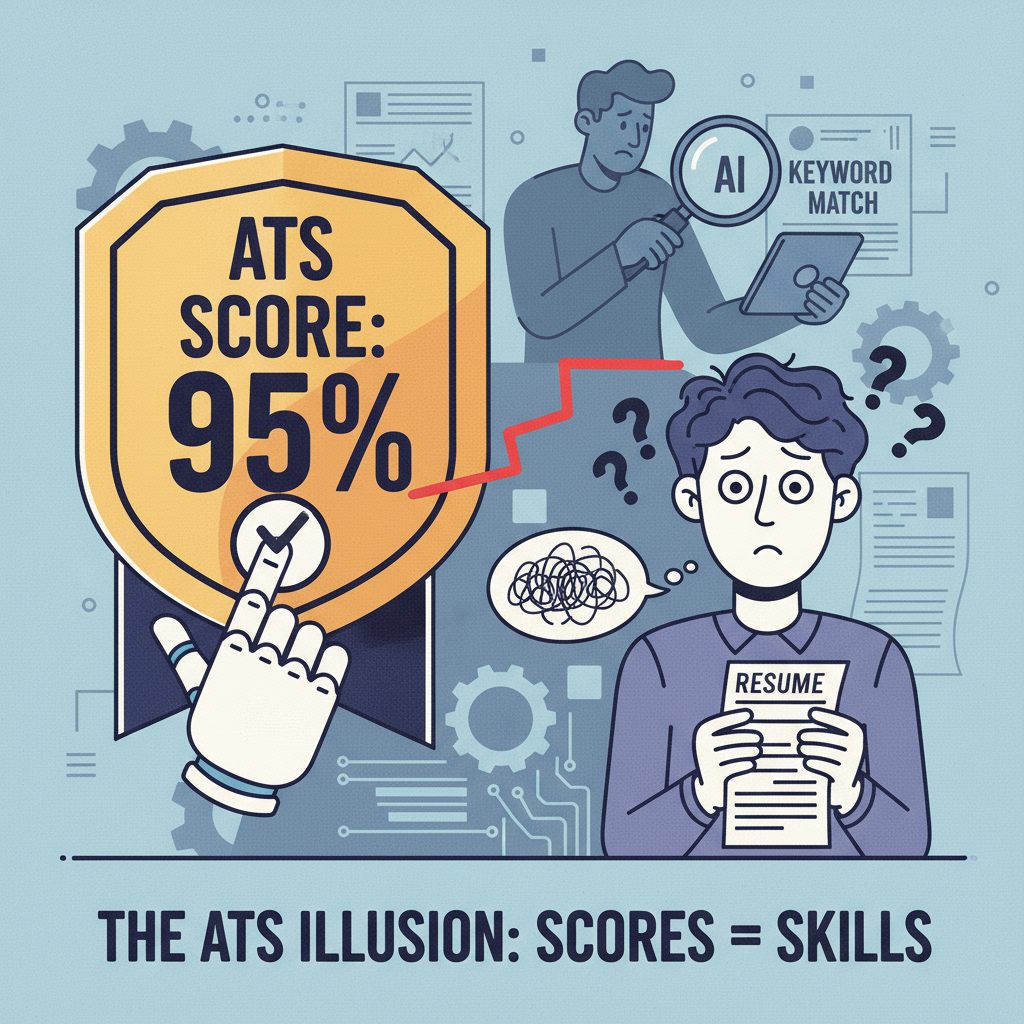
A high ATS match score can create a false sense of security. Many job seekers see a percentage in the 80s or 90s and assume their resume will automatically land in front of a hiring manager. The reality is far more complex. These scores are not standardized across different tools and platforms, meaning a 95% on one system might translate to a 70% on another.
The problem lies in what these scores actually measure. Most ATS scoring tools focus heavily on keyword matching and formatting compliance. While these factors matter, they don't tell the whole story about your qualifications or fit for a role. A resume can be perfectly optimized for an ATS algorithm yet fail to communicate the depth of your experience or the value you bring to an organization.
The Gap Between Score and Reality
Consider this sobering statistic: research shows that a significant portion of resumes are rejected by ATS before any human being ever sees them. Yet many of these rejected candidates possess the exact qualifications the employer is seeking. The issue isn't their competence—it's how their resume was structured or which keywords were emphasized.
Scores are directional indicators at best, not absolute measures of resume quality. They can't assess whether your achievements are compelling, whether your career progression makes sense, or whether you've demonstrated impact in your previous roles. An ATS might reward a resume stuffed with job description keywords while overlooking a thoughtfully crafted document that tells a coherent professional story.
Why High Scores Don't Guarantee Success
Failing an ATS scan doesn't necessarily mean a candidate lacks qualifications. Often, the issue lies in resume formatting, structure, or missing specific keyword variations that the system was programmed to detect. Conversely, a high score doesn't guarantee your resume will impress a human recruiter who's looking for evidence of real-world results and cultural fit.
The algorithms behind these scores vary widely. Some systems prioritize exact keyword matches, while others use more sophisticated semantic analysis. Some penalize creative formatting, while others are more forgiving. This lack of standardization means you're essentially optimizing for a moving target that changes from company to company.
Understanding the ATS score meaning requires recognizing these limitations. Use scores as one data point in your resume refinement process, but never as the sole measure of your document's effectiveness. The goal isn't to game the system—it's to create a resume that passes technical screening while also resonating with the humans who make hiring decisions.
Sources
The Misleading Nature of ATS Scores
A high ATS match score can create a false sense of security. Many job seekers see a percentage in the 80s or 90s and assume their resume will automatically land in front of a hiring manager. The reality is far more complex. These scores are not standardized across different tools and platforms, meaning a 95% on one system might translate to a 70% on another.
The problem lies in what these scores actually measure. Most ATS scoring tools focus heavily on keyword matching and formatting compliance. While these factors matter, they don't tell the whole story about your qualifications or fit for a role. A resume can be perfectly optimized for an ATS algorithm yet fail to communicate the depth of your experience or the value you bring to an organization.
The Gap Between Score and Reality
Consider this sobering statistic: research shows that a significant portion of resumes are rejected by ATS before any human being ever sees them. Yet many of these rejected candidates possess the exact qualifications the employer is seeking. The issue isn't their competence—it's how their resume was structured or which keywords were emphasized.
Scores are directional indicators at best, not absolute measures of resume quality. They can't assess whether your achievements are compelling, whether your career progression makes sense, or whether you've demonstrated impact in your previous roles. An ATS might reward a resume stuffed with job description keywords while overlooking a thoughtfully crafted document that tells a coherent professional story.
Why High Scores Don't Guarantee Success
Failing an ATS scan doesn't necessarily mean a candidate lacks qualifications. Often, the issue lies in resume formatting, structure, or missing specific keyword variations that the system was programmed to detect. Conversely, a high score doesn't guarantee your resume will impress a human recruiter who's looking for evidence of real-world results and cultural fit.
The algorithms behind these scores vary widely. Some systems prioritize exact keyword matches, while others use more sophisticated semantic analysis. Some penalize creative formatting, while others are more forgiving. This lack of standardization means you're essentially optimizing for a moving target that changes from company to company.
Understanding the ATS score meaning requires recognizing these limitations. Use scores as one data point in your resume refinement process, but never as the sole measure of your document's effectiveness. The goal isn't to game the system—it's to create a resume that passes technical screening while also resonating with the humans who make hiring decisions.
Sources
Navigating ATS Systems Effectively
Successfully navigating Applicant Tracking Systems requires a balanced approach that honors both technical optimization and authentic professional representation. While understanding ATS score meaning is important, the real skill lies in creating resumes that satisfy automated screening while genuinely reflecting your qualifications.
Strategic Keyword Integration
Keyword optimization remains a cornerstone of ATS navigation. The most effective approach involves mirroring language directly from the job description. When tailoring your resume, identify the primary skills and qualifications the employer emphasizes, then incorporate those exact phrases where they authentically apply to your experience.
This doesn't mean stuffing your resume with buzzwords. Instead, weave relevant keywords naturally into your accomplishments and responsibilities. If a job posting emphasizes "project management" and you've led projects, use that exact terminology rather than a synonym like "initiative coordination."
Customization for Each Application
Tailoring your resume for each job posting signals to the ATS that your background is relevant, improving your chances of a higher score. This customization goes beyond surface-level changes. Review the job description carefully and adjust your professional summary, skills section, and even the emphasis within your work history to align with what the employer seeks.
While this requires more effort than sending a generic resume, the investment pays dividends. A targeted resume demonstrates genuine interest and helps both the ATS and human reviewers quickly identify your fit for the role.
Maintaining Formatting Simplicity
ATS systems can struggle with complex formatting, graphics, and unusual document structures. Stick to standard section headings like "Work Experience," "Education," and "Skills." Use simple bullet points rather than tables or text boxes. Save your resume as a standard file format unless the application specifically requests otherwise.
These technical considerations ensure the ATS can properly parse your information without sacrificing readability for human reviewers who will ultimately make the hiring decision.
Balancing Optimization with Authenticity
The most critical aspect of ATS navigation is maintaining truthfulness while optimizing. Never claim skills you don't possess simply because they appear in the job description. Instead, focus on highlighting genuine qualifications that align with the role's requirements.
Your resume should tell a coherent story about your professional journey. When optimization and authenticity work together, you create a document that passes ATS screening and resonates with hiring managers—the combination that actually leads to interviews.
Sources
Common Misconceptions About ATS
Many job seekers operate under false assumptions about how Applicant Tracking Systems work. These misconceptions can lead to wasted effort and missed opportunities. Let's clear up the confusion around what these systems actually do and what they don't.
Misconception: All ATS Scores Are Standardized
One of the biggest myths is that a 75% match score means the same thing across all platforms. In reality, scores are not standardized across tools, so treat them as directional, not absolute. What one resume checker calls a 90% match might be scored as 65% by another system. Each tool uses its own algorithm and criteria for evaluation.
This inconsistency means you shouldn't fixate on hitting a specific number. Instead, focus on the underlying principles of clear formatting and relevant content.
Misconception: Higher Scores Guarantee Interviews
Many applicants believe that achieving a high match rate automatically translates to interview invitations. While some sources suggest aiming for a match rate of 75%, many applicants achieve success with scores closer to 65%. The score is just one factor in a much larger evaluation process.
Human recruiters still make the final decisions. A resume with a perfect technical score but weak accomplishments won't outperform a slightly lower-scoring resume with compelling achievements and clear value propositions.
Misconception: ATS Systems Reject Resumes Automatically
Contrary to popular belief, most ATS platforms don't automatically reject applications. They rank and organize candidates, but hiring managers typically review multiple resumes from the system. The software helps prioritize, not eliminate.
Using clear and recognizable section headings like 'Work Experience' and 'Education' helps ATS software categorize information correctly. This ensures your resume is properly parsed and presented to reviewers, rather than being misread or misfiled.
Misconception: Keyword Stuffing Improves Your Chances
Some candidates think loading their resume with every possible keyword will boost their score. This strategy often backfires. Modern systems can detect unnatural keyword density, and human reviewers will immediately spot resumes that read like keyword lists rather than professional narratives.
The goal is strategic keyword integration that maintains readability and authenticity. Your resume should sound like it was written by a person, not a machine trying to game another machine.
Sources
Real-World Examples of ATS Failures
Understanding ATS score meaning becomes clearer when we examine real-world scenarios where job seekers faced unexpected challenges. These examples illustrate how high match scores don't always translate to interview opportunities.
The High-Scoring Resume That Never Got Seen
Consider the marketing professional who received a 95% match score from an online ATS checker. Despite this impressive number, she received no responses from her applications. The issue? Her resume used creative formatting with text boxes and columns that the employer's actual ATS couldn't parse correctly. While the scoring tool gave her a high percentage, the real systems rejected her resume before any recruiter saw it.
This scenario highlights a critical gap between what scoring tools measure and what actual ATS platforms can process. The candidate had optimized for keywords but overlooked fundamental formatting requirements.
When Qualifications Don't Match the Score
Another common situation involves candidates who achieve strong ATS scores but lack the substantive qualifications for the role. A recent graduate applied to senior-level positions using a resume heavily optimized with industry keywords. His ATS match percentage was high, but his actual experience was entry-level.
When recruiters did review his application, the mismatch was immediately apparent. The ATS score couldn't assess whether his three months of internship experience genuinely qualified him for a role requiring five years of management expertise.
The Formatting Trap
Research shows that roughly 75% of resumes are currently discarded by ATS before a human ever sees them due to formatting errors. This statistic reveals a sobering truth: even qualified candidates can be filtered out not because of their skills, but because of technical issues like incompatible fonts, graphics, or complex layouts.
One software engineer with a decade of experience used a visually stunning resume template. His skills perfectly matched the job requirements, but the ATS couldn't read his information correctly. The system assigned him a low score, and his application never reached the hiring manager.
The Keyword Stuffing Backfire
Some job seekers attempt to game the system by stuffing their resumes with keywords, sometimes even hiding them in white text. While this might boost an ATS match score on some checkers, sophisticated systems and human reviewers quickly identify this tactic. One candidate received callbacks but was immediately rejected during phone screens when recruiters realized the keywords didn't reflect actual competencies.
These examples demonstrate that failing an ATS scan doesn't necessarily mean a candidate lacks qualifications. Often, the issue lies in resume formatting, structure, or an over-reliance on match scores rather than genuine skill representation.
Sources
Conclusion
Understanding ATS score meaning is essential, but it's equally important to recognize that these scores don't tell the complete story. While a high match percentage might seem encouraging, it doesn't guarantee callbacks or interviews. The reality is that Applicant Tracking Systems evaluate technical compatibility—keyword alignment, formatting cleanliness, and parsing accuracy—but they cannot assess the substance of your experience or your genuine fit for a role.
Throughout this article, we've explored how ATS scores can be misleading, why substance matters more than optimization alone, and how to navigate these systems without losing sight of what truly counts: presenting an authentic, compelling narrative of your professional value. The key is balance. Your resume must be technically sound enough to pass ATS filters, yet rich enough in content to impress the human reviewers who ultimately make hiring decisions.
I've seen this firsthand with clients who were initially fixated on achieving perfect scores. One professional came to me confident about his 92% match, yet puzzled by the silence from employers. When we reviewed his resume together, we found it was keyword-optimized but lacked the depth and authenticity that hiring managers seek. This experience reinforced what I emphasize to every job seeker: technical optimization matters, but never at the expense of genuine content that truly represents who you are as a professional.
Moving Forward with Confidence
As you craft or refine your resume, remember that ATS systems are gatekeepers, not decision-makers. Focus on creating a document that serves dual purposes: it must be ATS-friendly in format and keywords, while simultaneously showcasing your unique qualifications, measurable achievements, and career narrative. Use clear section headings, incorporate relevant industry terminology naturally, and ensure your accomplishments speak to the value you bring.
Don't let the pursuit of a perfect ATS score distract you from what employers actually want to see—evidence of your capabilities, your growth trajectory, and your potential contribution to their organization. The most successful resumes are those that pass the technical screening while captivating human readers with authentic, results-oriented content.
Sources

Written by
Emily Johnson
Published May 5, 2026 · 17 min read
Emily Johnson is a seasoned career strategist with over a decade of experience in recruitment and talent acquisition. With a background in human resources, she excels at helping professionals refine their job search strategies, from crafting compelling resumes to mastering interview techniques. As an expert in Applicant Tracking Systems (ATS), Emily is dedicated to guiding individuals toward their dream careers.
Want this kind of read on your résumé?
We'll tell you what's actually working, what's holding you back, and what to fix — in plain English.
Get My Job Match ScoreYou Might Also Like
More articles to help you advance your career
ATS Myths: Surprising Practical Misconceptions Debunked
Discover the truth about ATS myths and learn how applicant tracking systems really work with our practical guide to common misconceptions and realities.

Job Application Silence: Surprising Expert Insights and Solutions
Experiencing job application silence after applying? Discover surprising expert insights on why it happens and practical solutions to overcome it.