

Portfolio Building: 9 Essential Steps for Easy Success
Master portfolio building with 9 essential steps. Create professional portfolios that showcase your work and significantly boost your job prospects.
 Emily Johnson
Introduction
Key Takeaways
- Digital portfolios complement traditional resumes by showcasing your work in a dynamic, visual format that helps you stand out in competitive job markets
- A well-crafted portfolio provides richer context to your achievements, allowing employers to see beyond bullet points and understand your creative process
- Strategic portfolio building enhances your visibility in ATS screenings while adding a powerful layer of personal branding
- Following structured steps ensures your portfolio demonstrates measurable impact and aligns with employer expectations
- Regular portfolio maintenance keeps your professional brand current and relevant across different roles and industries
In today's competitive job market, a polished resume alone often isn't enough to differentiate you from other qualified candidates. I've worked with countless professionals who struggled to stand out despite having impressive credentials and experience. The challenge isn't a lack of talent—it's the difficulty of conveying the full scope of your abilities through a traditional resume format.
That's where portfolio building becomes a game-changer. A curated collection of your best work demonstrates your skills, versatility, and personal style in ways that bullet points simply cannot capture. When one of my clients embarked on her portfolio building journey, we focused on showcasing projects with engaging narratives that highlighted her expertise and measurable impact. The transformation was remarkable—employers could finally see beyond the resume, gaining genuine insight into her creative process and professional achievements.
The modern hiring landscape presents unique challenges, particularly with Applicant Tracking Systems screening candidates before human eyes ever review applications. Digital portfolios serve as powerful supplements that provide context, demonstrate competency, and build trust with recruiters. By carefully assembling your best work and explaining your role in each project, you create a compelling narrative that resonates with potential employers and helps you navigate ATS-driven hiring processes successfully.
This guide will walk you through nine essential steps to build a portfolio that enhances your resume, showcases your measurable impact, and significantly boosts your job prospects. Whether you're just starting your career or looking to make a strategic move, these proven strategies will help you create a professional portfolio that opens doors.
Sources
Why Digital Portfolios Matter in an ATS-Driven Job Market
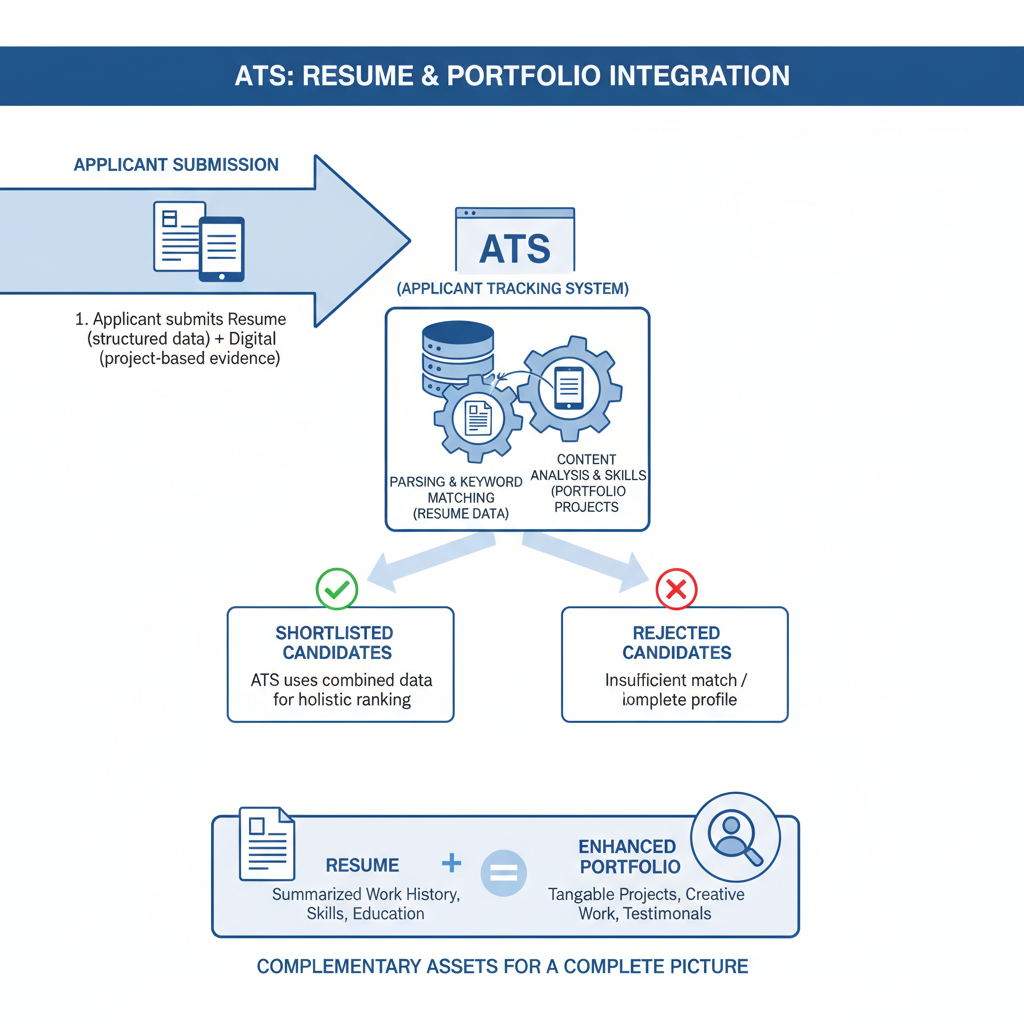
Applicant Tracking Systems have fundamentally changed how employers screen candidates. These automated systems parse resumes for keywords, qualifications, and relevant experience before a human ever reviews your application. While your resume serves as the primary document for ATS screening, it tells only part of your professional story.
A digital portfolio functions as a powerful complement to your resume, not a replacement. Think of your resume as the gateway that gets you past the initial ATS filters, while your portfolio provides the depth and context that helps you stand out once you've cleared that hurdle. The resume delivers the essential keywords and structured data that ATS systems need, while the portfolio showcases the quality and impact of your actual work.
Common Misconceptions About Portfolios and ATS
Many job seekers mistakenly believe they should submit their portfolio directly through an ATS instead of their resume. This approach typically backfires because ATS systems are designed to process standardized resume formats, not multimedia portfolio content. Your portfolio serves a different purpose in the application ecosystem.
Another misconception is that portfolios only matter for creative professionals. In reality, professionals across industries benefit from portfolio building. Whether you're in marketing, project management, data analysis, or technical fields, a well-constructed portfolio demonstrates your capabilities in ways a resume cannot.
How Digital Portfolios Enhance Your Application Strategy
Your digital portfolio adds a critical dimension to your job search by providing tangible proof of your skills and achievements. While your resume lists accomplishments in bullet points, your portfolio allows potential employers to see the actual results of your work. This visual and contextual evidence helps hiring managers move beyond the filtered list of candidates to identify those who can truly deliver.
The strategic value lies in the complementary relationship. Your ATS-optimized resume gets you into the consideration pool by matching keywords and qualifications. Your portfolio then differentiates you from other candidates who passed the same filters by demonstrating the depth and quality of your expertise. This combination significantly strengthens your position throughout the hiring process.
When employers review candidates who've made it through ATS screening, they're looking for evidence that validates resume claims. A portfolio that showcases relevant projects, demonstrates measurable outcomes, and reflects professional growth provides exactly that validation. It transforms you from a list of qualifications into a proven professional with documented results.
Core Elements of ATS-Friendly Portfolios
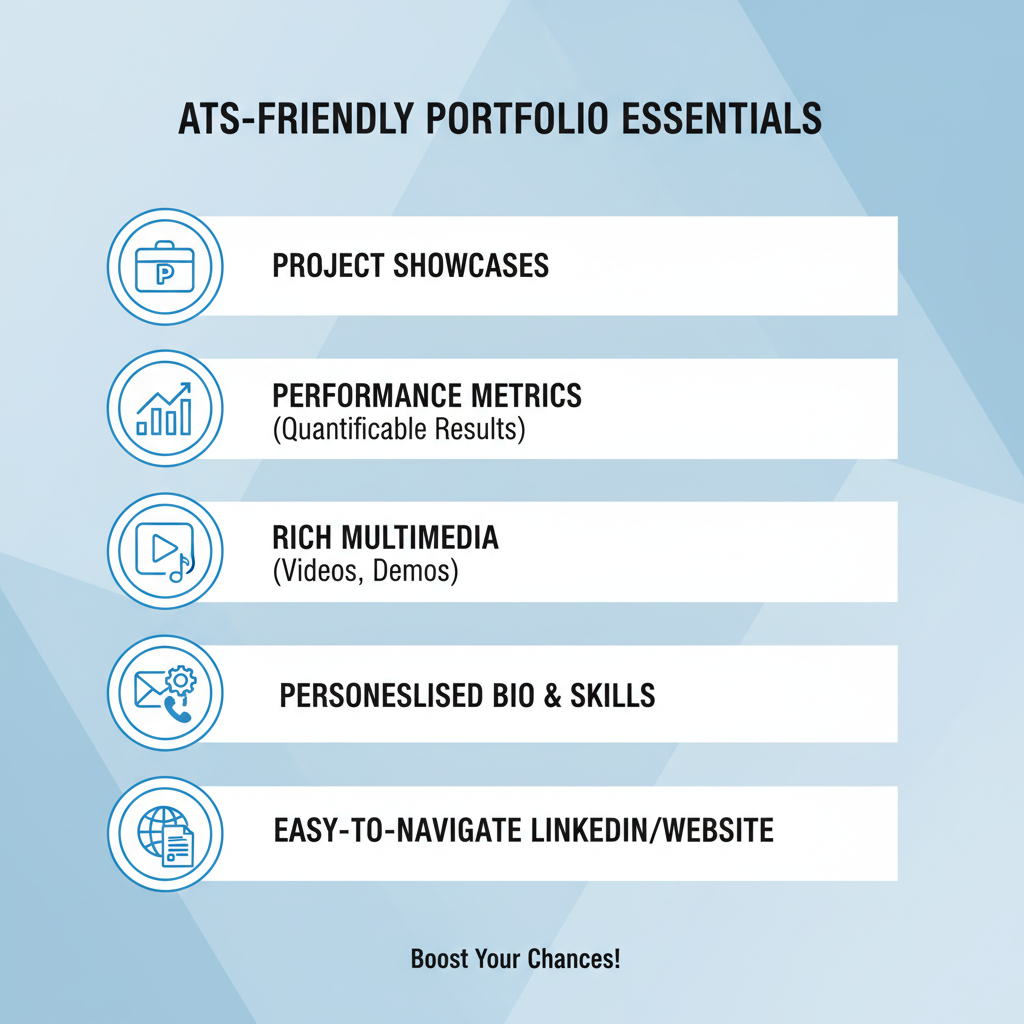
A well-structured digital portfolio serves as a curated collection of your best creative work, carefully assembled to demonstrate your skills, versatility, and personal style. While your resume passes through automated screening systems, your portfolio provides the human context that brings your accomplishments to life. Understanding which elements to include ensures your portfolio complements your application materials effectively.
Project Showcases That Tell Your Professional Story
Your project showcases form the backbone of any strong portfolio. Select work samples that demonstrate progression in your skills and highlight different aspects of your expertise. Each project should include a clear title, your specific role, and the context in which the work was created.
Quality always trumps quantity when curating your portfolio. Choose projects that showcase diverse capabilities rather than flooding your portfolio with similar examples. This approach demonstrates versatility and gives potential employers a comprehensive view of what you can deliver.
Metrics and Measurable Outcomes
Numbers speak louder than descriptions alone. Whenever possible, attach concrete metrics to your portfolio projects. Did your design increase user engagement? Did your strategy reduce costs or improve efficiency? Quantifiable results transform good work samples into compelling evidence of your impact.
Provide context for each project by explaining your role, the project type, and the tools you used. This transparency builds trust with recruiters and hiring managers who need to understand exactly what you contributed versus what was team effort.
Professional Bio and Contact Information
Your portfolio should include a concise professional bio that positions you within your industry. This narrative section complements the objective data in your resume by conveying your professional philosophy, core competencies, and career aspirations. Keep it focused and aligned with the roles you're targeting.
Make it effortless for employers to reach you. Include multiple contact methods such as email, phone number, and professional social media profiles. Ensure this information appears prominently and remains current as your career evolves.
Multimedia Elements That Enhance Understanding
Depending on your field, multimedia elements can significantly strengthen your portfolio. Videos, interactive prototypes, code samples, or audio clips provide richer context than static images alone. However, ensure all multimedia elements load quickly and display properly across different devices and browsers.
Demonstrate a range of skills through your multimedia choices. If you work in creative fields, show variety in your techniques and approaches. This breadth reassures employers that you can adapt to different project requirements and client needs.
Sources
Choosing the Right Platform and Format for Your Portfolio
Selecting the right platform for your portfolio is a strategic decision that can significantly impact how recruiters and hiring managers engage with your work. The ideal choice depends on your industry, the roles you're targeting, and how you plan to integrate your portfolio into your job search strategy.
Personal Websites: Maximum Control and Customization
A personal website gives you complete control over design, content, and presentation. This option works best for creative professionals, developers, and anyone who wants to demonstrate technical skills through the portfolio itself. You can showcase projects in detail, incorporate multimedia elements, and create a branded experience that reflects your professional identity.
The main advantage is flexibility—you decide exactly how your work appears and can update it instantly. However, personal websites require more technical knowledge to build and maintain, and you'll need to ensure the site remains accessible and loads quickly across all devices.
Portfolio Platforms: Quick Setup with Professional Templates
Dedicated portfolio platforms offer pre-designed templates optimized for showcasing creative work. These services are particularly valuable for designers, photographers, writers, and other visual professionals who need to get a portfolio online quickly without coding.
These platforms typically include built-in features like project galleries, case study layouts, and mobile responsiveness. The trade-off is less customization compared to a personal website, but the streamlined setup process and professional appearance make them an excellent choice for many job seekers.
PDF Portfolios: Portable and Attachment-Friendly
PDF portfolios serve as a downloadable, self-contained presentation of your work. This format is ideal when you need to attach your portfolio directly to an application or email it to a hiring manager. PDF portfolios work well for roles where you want to provide a curated selection of work samples without requiring internet access.
The key to effective PDF portfolios is keeping file sizes manageable while maintaining visual quality. Include a table of contents with clickable navigation, and ensure all text is searchable to support ATS compatibility when the PDF is uploaded alongside your resume.
LinkedIn: Integration with Professional Networking
LinkedIn's portfolio features allow you to attach work samples, presentations, and project links directly to your profile. This approach integrates portfolio building seamlessly with your professional network and makes your work visible to recruiters searching the platform.
While LinkedIn doesn't offer the same depth of presentation as dedicated portfolio platforms, it excels at visibility and discoverability. Use LinkedIn to highlight your best three to five projects, and link to a more comprehensive portfolio hosted elsewhere for those who want to explore further.
Matching Platform to Industry and Role
Different industries have different expectations for portfolio presentation. Creative fields often favor visual platforms with strong design capabilities, while technical roles may benefit from platforms that can embed code samples or interactive demonstrations. Research common practices in your target industry to ensure your platform choice aligns with employer expectations.
Consider maintaining multiple formats—a comprehensive personal website or platform portfolio as your primary showcase, with a PDF version for applications and LinkedIn highlights for networking. This multi-format approach ensures you can present your work appropriately regardless of how opportunities arise.
Sources
Curating Projects That Demonstrate Measurable Impact

Selecting the right projects for your portfolio is about quality over quantity. Rather than overwhelming hiring managers with every assignment you've completed, focus on curating a targeted collection that demonstrates your strongest capabilities and most relevant achievements.
Aim to include five to eight carefully chosen projects that showcase different facets of your expertise. This range provides enough variety to demonstrate versatility while maintaining focus and preventing decision fatigue for reviewers.
Selecting Projects That Tell Your Professional Story
When evaluating which projects to include, prioritize work that aligns with your target role and industry. Each project should serve a strategic purpose in your portfolio, whether it's demonstrating technical proficiency, creative problem-solving, or leadership capabilities.
Consider projects that highlight measurable outcomes. Did you increase efficiency, reduce costs, improve user engagement, or deliver ahead of schedule? These quantifiable results provide concrete evidence of your impact and resonate strongly with both ATS systems and human reviewers.
Demonstrate a range of skills across your portfolio selections. Versatility signals adaptability and breadth of expertise, making you a more attractive candidate for roles that require multifaceted competencies.
Writing Compelling Case Studies for Portfolio Building
Each project in your portfolio deserves more than a simple description. Structure your presentations as mini case studies that walk reviewers through your process and impact.
Begin with context: what was the challenge or objective? Then explain your approach and the specific actions you took. Finally, highlight the results with quantifiable metrics whenever possible. This problem-solution-outcome framework creates a narrative that's easy to follow and demonstrates your strategic thinking.
Use clear, professional language that avoids excessive jargon while still incorporating industry-relevant keywords. Remember that your portfolio may be reviewed by both technical experts and non-specialist recruiters.
Presenting Achievements With Quantifiable Results
Numbers tell a powerful story. Whenever possible, translate your contributions into measurable outcomes: percentages, dollar amounts, time saved, users reached, or efficiency gains.
If exact figures aren't available or are confidential, use ranges or relative improvements. Phrases like "reduced processing time by approximately one-third" or "managed projects valued in excess of six figures" still convey impact without compromising proprietary information.
Pair quantitative data with qualitative context. A statistic becomes more meaningful when accompanied by an explanation of why it mattered to the organization or client. This combination creates a complete picture of your value proposition.
Organizing Your Portfolio for Maximum Impact
Arrange your projects strategically. Consider leading with your strongest or most relevant work to make an immediate impression. Alternatively, organize by skill category or industry to make it easier for reviewers to find examples relevant to their specific needs.
Provide clear navigation and descriptive titles for each project. Hiring managers and ATS systems both benefit from straightforward organization that allows quick access to specific examples of your work.
Regularly review and refresh your portfolio selections as you complete new projects. What represented your best work two years ago may no longer be your most compelling example today.
Sources
Optimizing Your Portfolio for ATS Compatibility
While your portfolio showcases your best work, it must also be structured in a way that applicant tracking systems can process and index effectively. The technical aspects of portfolio building often determine whether your materials reach human reviewers or get lost in digital screening.
Strategic Keyword Integration for Portfolio Building
Keywords serve as the bridge between your portfolio and ATS algorithms. Identify the most relevant terms from job descriptions in your target roles and incorporate them naturally throughout your portfolio descriptions. Focus on skills, tools, technologies, and industry-specific terminology that align with your expertise.
Avoid keyword stuffing, which can trigger ATS red flags and create an unprofessional impression. Instead, weave keywords into project descriptions, role summaries, and case study narratives where they add genuine context. This approach ensures your portfolio remains both ATS-compatible and engaging for human readers.
File Formats and Technical Accessibility
The format of your portfolio files directly impacts ATS scannability. When providing downloadable versions of your work, prioritize formats that are universally readable and text-extractable. Standard document formats tend to process more reliably than proprietary or image-heavy alternatives.
Ensure any PDFs you include contain selectable text rather than scanned images. Many systems cannot extract information from image-based files, which means your carefully curated work may go unrecognized. Test your files by attempting to copy and paste text from them before uploading.
Creating Scannable Portfolio Descriptions
Structure your project descriptions with clear headings, bullet points, and short paragraphs. ATS algorithms parse content more effectively when information is organized hierarchically. Use descriptive headings that include relevant keywords and break complex projects into digestible sections.
Include specific details about your role, technologies used, and outcomes achieved in each project description. This structured approach helps both ATS systems and human reviewers quickly identify your relevant qualifications and understand the scope of your contributions.
Linking Strategies That Maintain ATS Flow
When incorporating links within your portfolio, use clean, descriptive anchor text rather than generic phrases. Links should enhance navigation without creating confusion for parsing algorithms. Ensure all external links are functional and lead to professional, relevant content that supports your candidacy.
Maintain a logical information architecture throughout your portfolio. A well-organized structure with consistent navigation helps ATS systems index your content accurately while providing a positive user experience for recruiters who review your work manually.
Sources
Strategic Ways to Link Your Portfolio to Your Resume and Applications
Successfully integrating your portfolio into your job application materials requires a strategic approach that enhances your candidacy without triggering ATS complications. The key is knowing exactly where and how to reference your portfolio URL so that both automated systems and human recruiters can access your work seamlessly.
The most effective placement for your portfolio link is in your resume's contact header, alongside your email and phone number. This prominent position ensures that ATS software captures the URL during initial parsing while making it immediately visible to hiring managers. Format the link as a clean, clickable URL rather than embedding it in complex formatting that might confuse parsing algorithms.
Optimal Resume Placement Strategies
Your contact information section should include your portfolio URL on its own line or grouped with your LinkedIn profile. Use a simple format like "Portfolio: yourname.com" or "View Work: portfoliosite.com/yourname" to maintain clarity. Avoid using hyperlinked text in PDF resumes, as some ATS platforms strip out embedded links during processing.
For creative professionals, consider adding a brief "Portfolio Highlights" section near the top of your resume. This dedicated space allows you to list 3-4 key projects with direct links to specific portfolio pages, providing context for each piece while demonstrating measurable impact.
Cover Letter Integration Techniques
Your cover letter offers an opportunity to contextualize your portfolio strategically. Reference specific projects that align with the job requirements, then direct readers to view them: "You can see examples of my work in campaign optimization at [portfolio URL]." This approach connects your narrative to tangible evidence without overwhelming the reader.
Place your portfolio link naturally within the body text when discussing relevant achievements, and repeat it in your closing paragraph as a call to action. This dual placement ensures visibility even if the recruiter skims your letter.
Application Form Best Practices
Many online application systems include fields for websites, LinkedIn profiles, or additional links. Always use these designated fields for your portfolio URL rather than trying to insert it into text boxes meant for other information. If no specific portfolio field exists, use the "Website" or "Professional Profile" field.
When application forms request work samples or attachments, provide your portfolio link in the file name or accompanying text field. For example, name a PDF "YourName_WorkSamples_PortfolioLink.pdf" and include the full URL in any available description box.
Ensuring ATS Compatibility
To prevent ATS issues, use standard URL formats without special characters or redirects. Avoid URL shorteners, which many systems flag as suspicious or fail to process correctly. Your portfolio domain should be professional and ideally include your name for easy recognition.
Test your portfolio link by copying and pasting it into multiple browsers and devices to ensure it works consistently. Some ATS platforms attempt to verify links during processing, so a broken or slow-loading portfolio site could negatively impact your application.
Context and Transparency
Providing context for each portfolio piece builds trust with recruiters and helps them understand your contributions. When referencing portfolio work in your application materials, briefly explain your specific role, the project objectives, and the tools or methodologies you employed. This transparency demonstrates professionalism and makes it easier for hiring teams to evaluate your capabilities.
Remember that your portfolio link should complement your resume, not replace it. Use application materials to highlight your most relevant achievements while directing interested parties to your portfolio for deeper exploration of your work and professional capabilities.
Sources
Tailoring Your Portfolio for Different Roles and Industries
Successful portfolio building requires strategic customization based on your target role and industry. A one-size-fits-all approach rarely resonates with hiring managers or passes through applicant tracking systems effectively. Instead, you need to adjust your portfolio's emphasis, project selection, and presentation style to align with specific career contexts.
Different industries value different types of evidence. Creative professionals benefit from visual showcases that demonstrate aesthetic judgment and innovation. Technical roles require portfolios that highlight problem-solving capabilities and technical proficiency. Business-focused positions demand evidence of strategic thinking and measurable outcomes. Understanding these distinctions helps you curate content that speaks directly to your audience's priorities.
Customizing for Creative Roles
Creative portfolios should lead with visual impact while maintaining ATS compatibility. Select projects that demonstrate range across different mediums, styles, or client types. Include brief context for each piece—the challenge, your approach, and the outcome—but let the work itself take center stage.
For designers, photographers, and artists, organize projects by theme or skill rather than chronologically. This approach helps reviewers quickly assess your capabilities in areas most relevant to their needs. Ensure image files are optimized for web viewing without sacrificing quality, and provide alternative text descriptions that include relevant keywords.
Adapting for Technical and Engineering Positions
Technical portfolios prioritize depth over visual polish. Focus on projects that showcase your methodology, technical skills, and problem-solving process. Include code samples, architecture diagrams, or technical documentation that demonstrates your expertise.
Structure each project entry to highlight the technical challenge, your solution approach, technologies used, and quantifiable results. For software developers, consider linking to repositories or live demos when appropriate. Data scientists should emphasize analytical frameworks and the business impact of their insights. Selectivity remains essential—choose quality examples that align with the specific technical requirements of your target roles.
Positioning for Business and Leadership Roles
Business-oriented portfolios emphasize strategic thinking and measurable impact. Select projects that demonstrate your ability to drive results, manage stakeholders, and solve complex organizational challenges. Each entry should clearly articulate the business context, your strategic approach, and concrete outcomes.
For management consultants, product managers, and business analysts, structure portfolio entries as case studies. Begin with the business problem, outline your analysis and recommendations, and conclude with implementation results. Use data visualizations and executive summaries to make complex information accessible. Focus on projects that showcase cross-functional collaboration and leadership capabilities.
Adjusting for Career Level
Entry-level portfolios should emphasize potential and foundational skills. Include academic projects, internships, volunteer work, and personal initiatives that demonstrate your capabilities. Focus on showing your learning process and ability to apply theoretical knowledge to practical challenges.
Mid-career professionals need portfolios that highlight increasing responsibility and impact. Select projects that show progression in scope, complexity, and leadership. Demonstrate how you've contributed to team success and organizational goals.
Senior-level portfolios should emphasize strategic vision and transformational impact. Choose projects that showcase your ability to drive organizational change, mentor others, and deliver results at scale. Include thought leadership pieces, speaking engagements, or industry contributions that establish your expertise.
Industry-Specific Considerations
Different industries have distinct expectations for portfolio presentation. Healthcare and financial services portfolios must carefully navigate confidentiality requirements while still demonstrating expertise. Technology portfolios benefit from interactive elements and technical depth. Education portfolios should highlight teaching philosophy and student outcomes.
Research your target industry's norms and expectations. Review portfolios of successful professionals in your field to understand what resonates with hiring managers. Adapt your approach while maintaining your authentic professional voice and ensuring ATS compatibility throughout.
Sources
Maintaining and Updating Your Portfolio Over Time
A portfolio is never a one-and-done project. The most effective portfolios evolve alongside your career, reflecting your current skills and most impressive achievements. Regular maintenance ensures your portfolio remains relevant and competitive in an ever-changing job market.
Think of your portfolio as a living document that requires the same attention you give to your resume. As you complete new projects and develop fresh skills, your portfolio should showcase this growth. Outdated work can actually harm your professional image, suggesting you haven't progressed or learned new techniques.
Establish a Quarterly Review Schedule
Set a recurring calendar reminder every three months to review your portfolio comprehensively. During these reviews, assess whether each project still represents your best work and aligns with your current career direction. This consistent cadence prevents your portfolio from becoming stale while keeping maintenance manageable.
Quarterly reviews also give you time to document projects while they're still fresh in your mind. Capture metrics, challenges overcome, and specific contributions before details fade. This proactive approach makes updates easier and ensures accuracy in your project descriptions.
Add New Work Strategically
Not every project deserves portfolio space. Apply a quality-over-quantity filter when considering additions. Ask yourself whether a new project demonstrates skills that aren't already represented, shows measurable impact, or illustrates growth in your capabilities.
When adding new work, include complete context: your role, the challenge addressed, your approach, and quantifiable results. Fresh projects should seamlessly integrate with your existing portfolio structure, maintaining consistent formatting and presentation standards throughout.
Retire Outdated Projects Thoughtfully
Removing older work can feel difficult, but it's essential for portfolio building success. Projects from early in your career may no longer reflect your current skill level or professional direction. Evaluate each piece against your current capabilities and target roles.
Consider retiring projects that use obsolete technologies, showcase work that's now basic for your experience level, or don't align with the positions you're pursuing. Keep your portfolio focused on your strongest, most relevant work—typically five to ten carefully selected projects that tell a compelling professional story.
Update Your Portfolio Objectives Regularly
As your career goals shift, your portfolio focus should adapt accordingly. If you're transitioning into leadership roles, emphasize projects where you managed teams or drove strategic initiatives. If you're pivoting industries, highlight transferable skills and relevant accomplishments.
Align your portfolio with a clear professional benchmark that reflects where you want to be, not just where you've been. This forward-looking approach helps recruiters and hiring managers see you in the role you're targeting, not just the roles you've held.
Monitor Performance and Engagement
If your portfolio platform provides analytics, review them during your quarterly updates. Track which projects receive the most views, how long visitors spend on your portfolio, and where traffic originates. These insights reveal what resonates with your audience and can guide future content decisions.
Pay attention to feedback from networking contacts, interviewers, and mentors. Their perspectives can highlight strengths you're underemphasizing or weaknesses you haven't noticed. Use this input to refine your portfolio's focus and presentation.
Keep Technical Elements Current
Regularly test all links to ensure they're working correctly. Broken links create a poor impression and may prevent recruiters from seeing your best work. Verify that embedded media loads properly and that any external hosting services remain active.
Check your portfolio's mobile responsiveness periodically, as platform updates or browser changes can affect display. Ensure contact information stays current, especially if you change email addresses or phone numbers. These technical details matter as much as your project content.
Sources
Common Portfolio Mistakes That Undermine ATS Success
Even the most talented professionals can sabotage their job prospects by making avoidable portfolio errors. Understanding these common pitfalls helps you build a portfolio that works seamlessly with applicant tracking systems while showcasing your best work.
Overcomplicated Designs That Confuse Recruiters
While creativity has its place, overly complex portfolio designs often backfire. Flashy animations, intricate navigation menus, and non-standard layouts can frustrate hiring managers who need to quickly assess your qualifications. Keep your design clean and intuitive, prioritizing content over visual gimmicks.
Remember that recruiters typically spend only seconds scanning portfolios. If they can't immediately find your key projects or understand your value proposition, they'll move on to the next candidate.
Missing Context and Project Narratives
Displaying work samples without explanation is a critical mistake. Each project needs context: what problem you solved, your specific role, the tools you used, and the outcomes you achieved. Without this narrative framework, reviewers can't fully appreciate your contributions or assess your skill level.
Provide brief but comprehensive descriptions that tell the story behind each portfolio piece. This context helps ATS systems index relevant keywords while giving human reviewers the information they need to evaluate your expertise.
Broken Links and Technical Failures
Nothing undermines credibility faster than broken links, missing images, or pages that won't load. These technical failures suggest carelessness and can completely derail your application. Regularly test every link in your portfolio, especially before submitting applications.
Pay special attention to external resources, embedded media, and downloadable files. What worked last month might be broken today, so consistent maintenance is essential.
Poor Mobile Optimization
Many recruiters review portfolios on mobile devices during commutes or between meetings. If your portfolio isn't mobile-responsive, you're automatically excluding a significant portion of potential viewers. Text should resize appropriately, images should load efficiently, and navigation should work smoothly on smaller screens.
Test your portfolio on multiple devices and browsers to ensure consistent functionality. A portfolio that looks perfect on your desktop but fails on mobile devices creates an incomplete picture of your professionalism.
Confidentiality Breaches and Proprietary Information
Sharing confidential client work, proprietary data, or sensitive business information can have serious legal and professional consequences. Even if you're proud of the work, displaying it without permission damages trust and can result in legal action.
When in doubt, create sanitized versions of projects that demonstrate your skills without revealing confidential details. Replace real company names with generic descriptors, obscure sensitive data, and always obtain written permission before showcasing client work.
Neglecting Keyword Optimization
Failing to incorporate relevant industry keywords throughout your portfolio limits its discoverability by ATS platforms. Your project descriptions, skills sections, and professional summary should naturally include terms that hiring managers search for in your field.
However, avoid keyword stuffing, which reads unnaturally and can trigger spam filters. Focus on authentic descriptions that naturally incorporate industry-standard terminology.
Inconsistent Branding Across Platforms
Your portfolio should align with your resume, LinkedIn profile, and other professional materials. Inconsistencies in job titles, dates, or project descriptions raise red flags for recruiters and can undermine your credibility. Maintain consistent messaging and branding across all platforms.
This consistency reinforces your professional identity and makes it easier for hiring managers to verify your qualifications across multiple touchpoints.
Conclusion
Portfolio building is more than a professional exercise—it's a strategic investment in your career trajectory. In today's competitive job market, where automated systems screen thousands of applications, a well-crafted digital portfolio gives you a distinct edge. It transforms your resume from a static list of credentials into a dynamic showcase of your capabilities, allowing hiring managers to see the depth and quality of your work beyond what any applicant tracking system can capture.
Throughout my years as a career strategist, I've witnessed firsthand how a comprehensive digital portfolio can differentiate candidates in crowded applicant pools. The professionals who invest time in building and maintaining their portfolios consistently report stronger interview conversion rates and more compelling conversations with potential employers. Your portfolio becomes a living document that evolves with your career, capturing your growth and expanding skill set in ways that resonate with decision-makers.
Take Action Today
The best time to start your portfolio building journey is now. Begin by selecting three to five projects that demonstrate measurable impact in your field. Focus on quality over quantity—curate work that tells a compelling story about your problem-solving abilities and professional achievements. Remember that your portfolio doesn't need to be perfect from day one; it's a work in progress that will improve as you refine your approach and add new accomplishments.
Set aside time this week to choose your platform, gather your best work samples, and create your first project descriptions. Whether you're a designer, developer, marketer, or business professional, the principles of effective portfolio building remain consistent: clarity, relevance, and evidence of impact. Your future self will thank you for taking this step toward greater career visibility and opportunity.
Sources

Written by
Emily Johnson
Published March 2, 2026 · 28 min read
Emily Johnson is a seasoned career strategist with over a decade of experience in recruitment and talent acquisition. With a background in human resources, she excels at helping professionals refine their job search strategies, from crafting compelling resumes to mastering interview techniques. As an expert in Applicant Tracking Systems (ATS), Emily is dedicated to guiding individuals toward their dream careers.
Want this kind of read on your résumé?
We'll tell you what's actually working, what's holding you back, and what to fix — in plain English.
Get My Job Match ScoreYou Might Also Like
More articles to help you advance your career
ATS Resume Tips: 9 Essential Steps for Stress-Free Success
Master ATS resume tips with 9 essential steps to optimize your resume, land more interviews, and stand out in today's competitive hiring process.
Resume Analysis: 9 Simple Expert Tips for Ultimate Improvement
Resume analysis boosts your job prospects with effective strategies for a standout, ATS-friendly resume. Learn the best methods to excel.